Ripik.ai has been associated with IMFA since Jan 2023 towards implementation of Industry 4.0 in our Choudwar plant located in Odisha. They are working on two machine learning / data science use related to power and metallurgical coke consumption optimization through real-time alerts. The team has good knowledge in the areas of data science & machine learning, and their problem solving skill set is high
I have known Pinak, Arunabh and Navneet since 2017. They were part of Advanced analytics program in TSK between 2017 and 2020 and placed a crucial role in its delivery. The team worked end to end in conceptualization and delivery of the use cases across Blast Furnace, Sinter Plant and Steel Melt Shop.

Ripik.ai has been the analytics partner of Godrej & Boyce since March 2022. They have been doing projects with the Interio and Aerospace businesses already and we are exploring use cases for other businesses as well. Pinak and his team have worked with us closely on these manufacturing use cases. They have an unparalleled understanding of the process and can bring impact very quickly
I am delighted to write this testimonial about Ripik.ai, one of ESL’s analytics partner since January 2023. The Ripik.ai team is working on three use cases in our Upstream section at the Bokaro plant – Digital Twin of Blast Furnace, Burden Mix optimization in Blast Furnace and Green Mix optimization in Sinter Plant Burden Mix optimization in Blast Furnace and Green Mix …
Meet our elite squad - some of the brightest minds from Google, MIT, and IITs, pioneering the future at Ripik.AI.
Choose Ripik.AI for innovative Computer Vision AI Solution that drive operational excellence in manufacturing industries.
Join Ripik.AI where learning is more impactful, diversity inspires, and work-life harmony thrives.
Explore the latest breakthroughs, partnerships, and global recognitions shaping Ripik.AI's impact on industrial AI
Discover Ripik AI's latest event appearances showcasing cutting-edge AI solutions for manufacturing.
Tackle raw material variability and environmental challenges with accurate, real-time visibility.
Transforming Cement Manufacturing Operations with Our Patented Vision AI SaaS Platform for Process Optimization
Empower operators to precisely control bath temperature and significantly reduce power usage and AIF3 consumption.
Solve high impact use cases and maximize quality by identifying important parameters and sweet spot of operations.
Revolutionizing boiler operations with patented Computer Vision for higher productivity and lower energy costs.
Unlock efficiency and optimize processes across industries with our advanced, and intelligent AI technologies.
Ripik’s Vision AI Agents are your automated pair of eyes — developing intelligent monitoring agents for engineered industrial performance.
Move beyond number crunching and reduce process variability with an automated pair of eyes—our Vision AI platform
Let us walk you through a tailored demo experience.
Tackle raw material variability and environmental challenges with accurate, real-time visibility.
Transforming Cement Manufacturing Operations with Our Patented Vision AI SaaS Platform for Process Optimization
Empower operators to precisely control bath temperature and significantly reduce power usage and AIF3 consumption.
Solve high impact use cases and maximize quality by identifying important parameters and sweet spot of operations.
Revolutionizing boiler operations with patented Computer Vision for higher productivity and lower energy costs.
Unlock efficiency and optimize processes across industries with our advanced, and intelligent AI technologies.
Ripik.ai has been associated with IMFA since Jan 2023 towards implementation of Industry 4.0 in our Choudwar plant located in Odisha. They are working on two machine learning / data science use related to power and metallurgical coke consumption optimization through real-time alerts. The team has good knowledge in the areas of data science & machine learning, and their problem solving skill set is high
I have known Pinak, Arunabh and Navneet since 2017. They were part of Advanced analytics program in TSK between 2017 and 2020 and placed a crucial role in its delivery. The team worked end to end in conceptualization and delivery of the use cases across Blast Furnace, Sinter Plant and Steel Melt Shop.
Ripik.ai has been the analytics partner of Godrej & Boyce since March 2022. They have been doing projects with the Interio and Aerospace businesses already and we are exploring use cases for other businesses as well. Pinak and his team have worked with us closely on these manufacturing use cases. They have an unparalleled understanding of the process and can bring impact very quickly
I am delighted to write this testimonial about Ripik.ai, one of ESL’s analytics partner since January 2023. The Ripik.ai team is working on three use cases in our Upstream section at the Bokaro plant – Digital Twin of Blast Furnace, Burden Mix optimization in Blast Furnace and Green Mix optimization in Sinter Plant Burden Mix optimization in Blast Furnace and Green Mix …
Meet our elite squad - some of the brightest minds from Google, MIT, and IITs, pioneering the future at Ripik.AI.
Choose Ripik.AI for innovative Computer Vision AI Solution that drive operational excellence in manufacturing industries.

Join Ripik.AI where learning is more impactful, diversity inspires, and work-life harmony thrives.

Explore the latest breakthroughs, partnerships, and global recognitions shaping Ripik.AI's impact on industrial AI
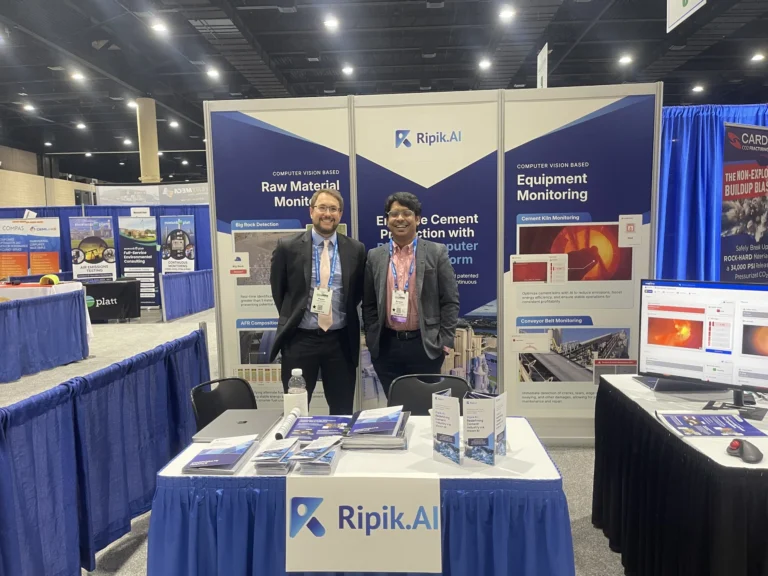
Discover Ripik AI's latest event appearances showcasing cutting-edge AI solutions for manufacturing.
Ripik’s Vision AI Agents are your automated pair of eyes — developing intelligent monitoring agents for engineered industrial performance.
Move beyond number crunching and reduce process variability with an automated pair of eyes—our Vision AI platform

Let us walk you through a tailored demo experience.
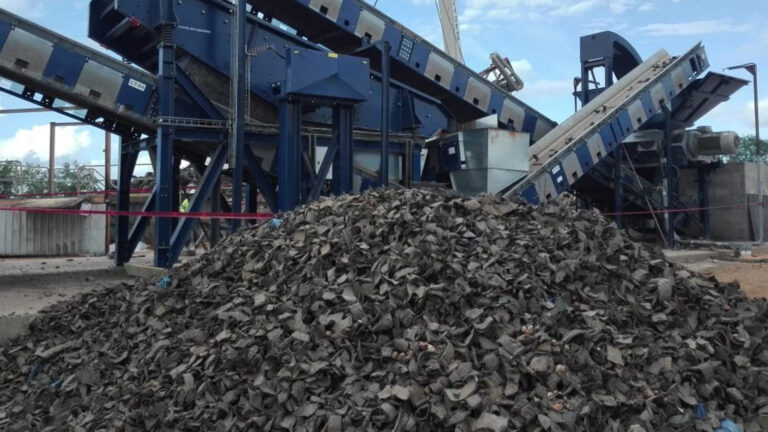
Stockpile management has always been a critical component of inventory control in industries that rely on raw materials, such as mining, construction, and agriculture. Efficient stockpile volume measurement plays a pivotal role in ensuring that inventory is accurately tracked, material waste is minimized, and operational costs are optimized. However, traditional methods of measuring stock volumes are fraught with challenges. These techniques are not only inefficient but can also lead to inaccurate data and safety risks.
In recent years, advancements in technology, particularly in Vision AI and LiDAR (Light Detection and Ranging), have transformed the way stockpile volumes are estimated. By automating this process, businesses can now gain real-time, precise measurements without the need for manual intervention. Vision AI and LiDAR are transforming stockpile volume measurement and enhancing stockpile management across various industries.
For many years, traditional methods of stockpile volume measurement relied on manual processes, often involving surveyors who physically measured the stockpiles using tools like measuring tapes or GPS devices. While these methods were once standard practice, they have significant limitations that make them increasingly impractical in today's fast-paced and data-driven industries.
Manual measurement methods were familiar but were inherently prone to error and inefficiency. Surveyors must physically walk around and measure various points on the stockpile, this process is time-consuming, labor-intensive, and subject to human error. This becomes even more problematic when measuring irregular or large stockpiles in difficult terrain, often resulting in inaccurate data and faulty inventory calculations. Such inaccuracies can cause businesses to either overestimate or underestimate material quantities, leading to excess stockpiles, shortages, or unnecessary procurement, which disrupt operations. Additionally, manual measurement methods pose significant safety risks as workers navigate unstable stockpiles or operate near heavy machinery, exposing them to potential injury from shifting piles or other hazardous circumstances.
Materials stockpile management is a critical aspect of manufacturing and industrial operations, but it comes with its own set of challenges. Here are some of the key difficulties faced in managing raw material stockpiles:
Lack of Accurate Inventory Visibility Raw materials stockpiles ooften suffer from poor visibility, and inaccurate or outdated inventory data leading to overstocking or stockouts. This disruption can affect production schedules, increase storage costs, and create inefficiencies in supply chain management, as companies struggle to maintain the right material levels for production needs. Inefficient inventory management further exacerbates the issue, leading to increased material wastage and unnecessary procurement of additional materials.
When materials are stored for long periods without proper protection, they are vulnerable to environmental conditions such as moisture or extreme temperatures. This can result in degradation, which affects the quality and usability of materials like coal, limestone, or metals, ultimately leading to delays, waste, and higher production costs due to compromised raw materials.
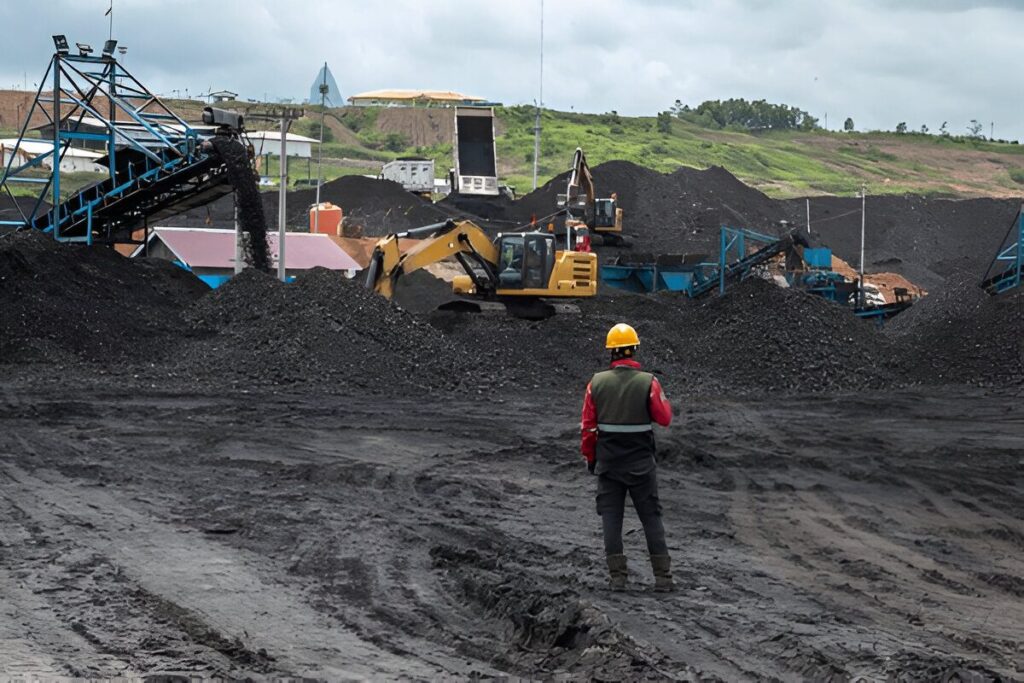
Stockpiles of certain materials, such as coal, chemicals, or metals, present significant safety hazards, including the risk of fires, explosions, or the creation of hazardous dust. Managing these risks requires adherence to stringent safety regulations, regular inspections, and the implementation of specialized safety equipment, which can add to the complexity and cost of stockpile management. Manual methods of stockpile monitoring and maintenance introduce additional safety risks, as they may rely on outdated processes or lack real-time insights, further compromising operational safety.
The transportation and handling of materials to and from stockpiles can be time-consuming and costly. Inefficient logistical operations or delays in moving materials can disrupt production schedules, cause unnecessary downtime, and increase the overall cost of operations. This issue becomes particularly prominent in large-scale operations with complex material flow requirements.
Managing large material stockpiles often presents challenges in terms of storage space optimization. Poor space utilization can cause disorganization, making it difficult to access materials when needed and increasing handling times. Inefficiently stored materials may also lead to safety risks, such as stockpile instability, further complicating management efforts. This also contributes to unnecessary material wastage, as materials may be lost or become difficult to recover.
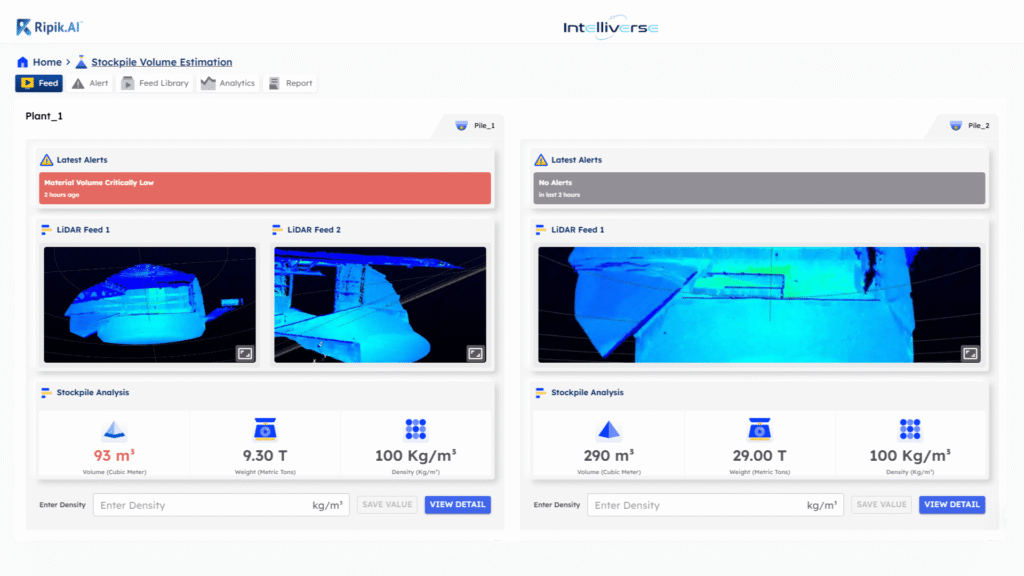
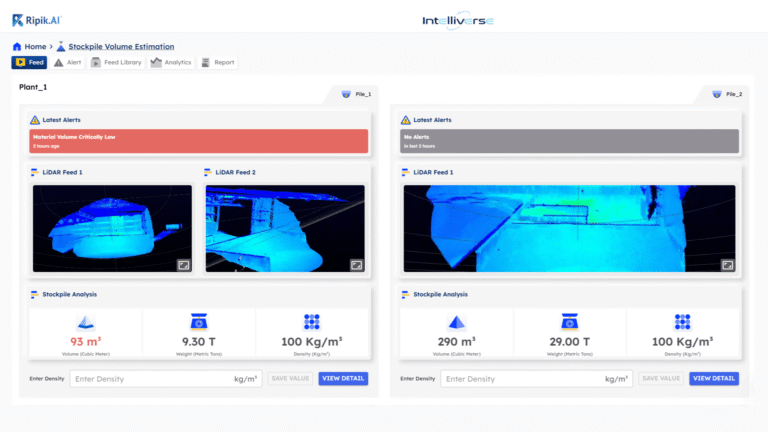
Vision AI, when integrated with LIDAR technology, plays a transformative role in stockpile management by offering precise volumetric measurement and real-time monitoring. The combination of LIDAR’s 3D mapping and IP camera feeds allows for accurate stockpile volume estimation, even in complex material environments. This technology automates the process, providing operators with continuous data on volume, weight, and material density, significantly reducing human error.
With Vision AI, stockpile conditions are monitored through visual analysis of materials, revealing critical insights such as density variations and distribution patterns. This enables businesses to track material movement, ensuring optimal inventory levels. The automated system not only enhances operational efficiency but also provides real-time alerts if stockpile volume, shape, or distribution changes significantly, allowing operators to swiftly address any discrepancies. By generating historical video feeds and detailed reports, this technology offers a comprehensive view of stockpile performance over time, helping businesses analyze trends and make data-driven decisions for future stockpile management strategies.
Read More
The integration of Vision AI and LiDAR into the Stockpile Management System offers several key benefits for industries such as mining, cement, steel, and other manufacturing sectors, enhancing both operational efficiency and safety. Here are some of the major advantages:
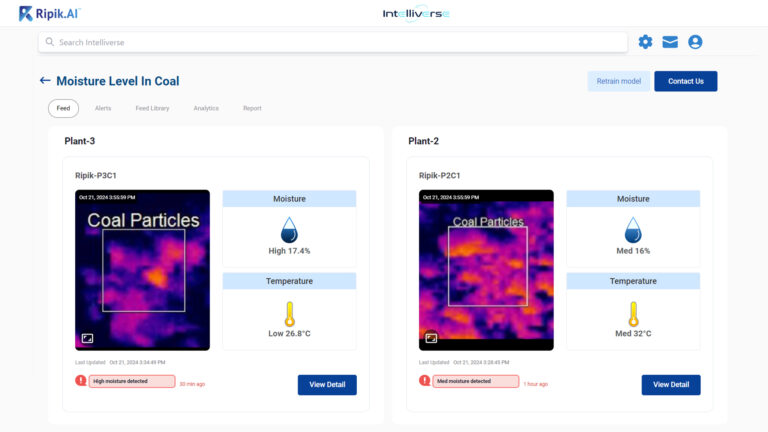
Vision AI in the Stockpile Management system enables real-time visibility into the stockpile's condition, including its size, composition, and moisture levels, ensuring accurate monitoring. AI-powered IP cameras analyze material distribution, preventing inconsistencies and optimizing stockpile usage. Moisture detection through thermal and hyperspectral imaging helps mitigate spoilage and combustion risks in coal stockpiles. Real-time data enables better stockpile rotation, reducing material degradation and maintaining quality, for better decision-making regarding stockpile rotation and usage.
Stockpile inventory management ensures that raw materials such as coal, ore, limestone, or aggregates are stored, retrieved, and utilized efficiently. By implementing automated stockpile tracking and retrieval mechanisms, industries can reduce dependency on manual handling, which often leads to inefficiencies, inaccuracies, and delays. Proper stockpile management software also ensures smooth material flow into production, reducing the risk of production halts due to material shortages or mismanagement.
Advanced Stockpile Management Systems predict material consumption trends and optimize replenishment schedules, ensuring seamless operations. Automated stock replenishment alerts prevent stockouts by accurately forecasting when materials will run low, allowing for timely restocking and avoiding production delays. AI-based usage forecasting enhances procurement and logistics planning, reducing lead times and improving supply chain efficiency. Additionally, preventive maintenance alerts detect early signs of stockpile degradation, enabling proactive corrective actions to minimize material losses and maintain quality.
Maintaining consistent material quality is crucial for industries such as cement, steel, and mining. Variations in raw material composition can impact the final product quality. A well-implemented Stockpile Management System monitors key parameters like particle size distribution, chemical composition, and moisture levels, ensuring that only the right blend of materials is used in production, preventing production failures, reducing wastage, and enhancing the quality of the final product.
Stockpile sites can be hazardous due to the risk of collapse, fire, or contamination. Stockpile Management software incorporates geofencing, automated alerts, and surveillance tools to ensure safe stockpile management. It also helps industries comply with regulatory requirements regarding material storage, environmental impact, and workplace safety. By continuously monitoring stockpile conditions, the Stockpile Management system reduces the likelihood of accidents, fines, or legal liabilities.
Stockpile Management plays a crucial role in various industries by optimizing material handling, storage, and utilization. Here are some key applications of Stockpile Management Systems across different industries:
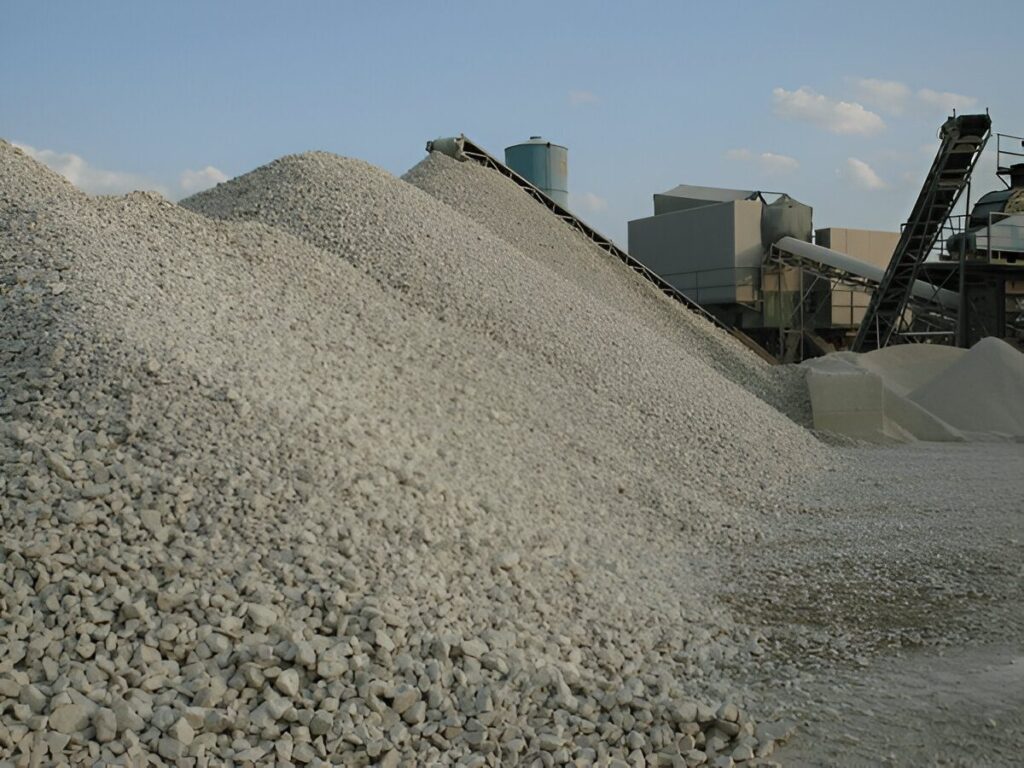
In cement production, efficient stockpile management ensures a continuous supply of raw materials such as limestone, clay, and gypsum. Cement Stockpile Management monitors stockpile inventory and provides alerts when material levels drop, allowing for timely replenishment. For instance, when cement manufacturers face fluctuations in material quality, SMS systems help track and blend raw materials to maintain uniformity in the final product. Stockpile Monitoring Systems also aid in minimizing spoilage and contamination, ensuring that only suitable materials are used, which leads to higher-quality cement and better operational efficiency.
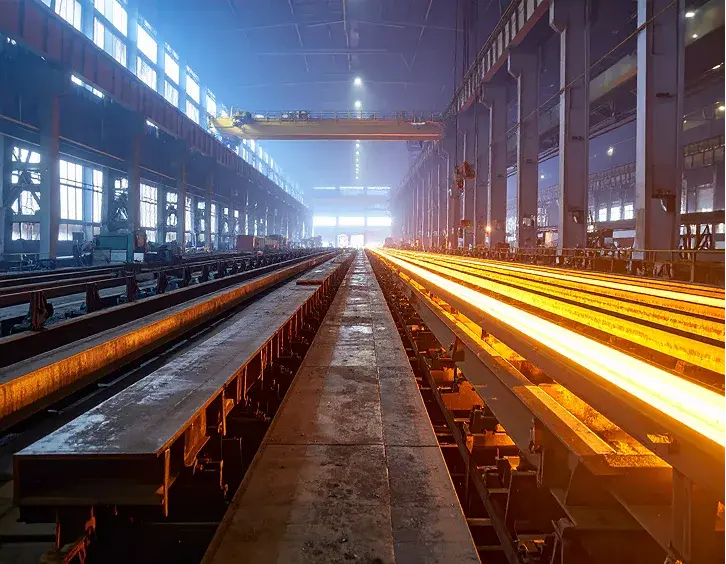
In steel manufacturing, stockpile management is crucial for handling raw materials like iron ore, coke, and flux. Stockpile inventory management helps monitor and track the quantities of these materials to ensure a steady supply for blast furnaces and other production lines. For example, Stockpile Monitoring Systems can optimize the handling of iron ore stockpiles by automatically adjusting blending ratios based on real-time material analysis, preventing variations that could affect furnace operations. By maintaining a proper balance between different types of raw materials, Automated bulk material monitoring can help optimize fuel consumption and reduce the risk of furnace instability, leading to more efficient steel production.
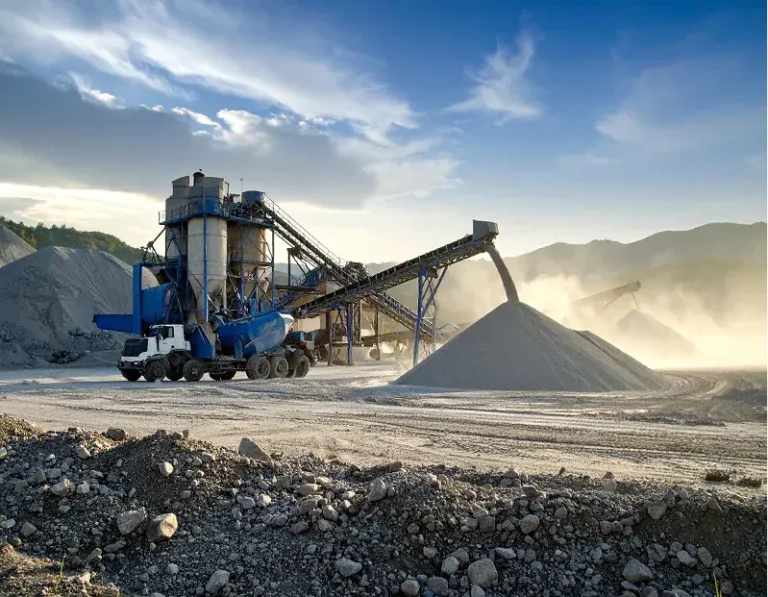
Automated bulk material monitoring system plays a key role in managing the vast quantities of minerals and ores in the mining industry. It helps optimize inventory by accurately tracking stockpile levels in real time, ensuring a steady supply of raw materials for processing. For example, in copper mining, Stockpile Monitoring Systems can automate ore blending by using real-time data on material quality, ensuring consistent ore grade and preventing the use of suboptimal materials. This reduces processing costs, improves quality, and helps meet production targets without overstocking or shortages.
Stockpile management in the agriculture industry helps optimize grain storage, preventing spoilage and maintaining product quality. Conveyor belt scanner is used to detect foreign materials, sort grain by size, and monitor temperature levels during transport. AI-based scanners also help track inventory levels in real-time, allowing food processors to adjust supply chains efficiently and prevent shortages or overproduction.
In conclusion, automating stockpile volume measurement with Vision AI and LiDAR offers influential advantages over traditional methods. These systems provide businesses with accurate, real-time data that enhances decision-making, improves inventory management, and reduces operational inefficiencies. By eliminating the need for manual measurements, businesses can save time, reduce labor costs, and improve safety.
As industries continue to evolve and rely more heavily on automation and data-driven decision-making, the role of Vision AI and LiDAR in stockpile management will become increasingly important. Businesses that are looking to optimize their processes and streamline stockpile management should explore these technologies to stay competitive in the ever-changing marketplace.
Insights and perspectives from Ripik.ai's thought leaders
AI-Driven Productivity Tracking involves real-time monitoring of workflows, resources, machine performance,...
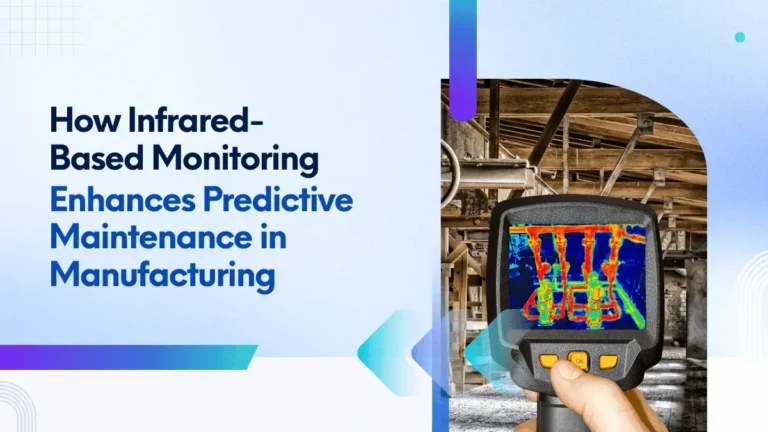
IR monitoring combined with vision systems are trained to identify complex patterns and subtle thermal...
Effective manufacturing process monitoring ensures operational excellence, product consistency, and proactive...
Machine health monitoring empowers maintenance teams to transition from reactive maintenance to condition-based...
As businesses scale and diversify, the demand for greater efficiency, minimal downtime, and enhanced...
AI in the mining industry is not merely a trend; it’s a necessity. With vast operations often spread...
Discover how AI is transforming plant uptime in manufacturing by enabling predictive maintenance, real-time...
Agentic AI in manufacturing operations are designed, executed, and optimized. These systems act autonomously,...
Root Mean Square Error (RMSE) is a widely used metric that measures the average magnitude of prediction...
The blast furnaces steelmaking process is a complex and requires precise control over various parameters....
AI platforms for anomaly detection are transforming a wide range of industries by leveraging advanced...
The role of AI in enhancing energy efficiency in cement plants particularly in fuel Consumption is significant...
Vision AI agent operate through a structured pipeline involving perception, analysis, decision-making,...
Particle size analysis plays a critical role in heavy industries such as cement, mining, steel, and power...
Conveyor volume scanners are revolutionizing stockpile management by providing precise, real-time data...
AI agents are revolutionizing businesses by automating processes, improving decision-making, and optimizing...
Vision AI is an advanced artificial intelligence-powered system that uses computer vision to interpret...
Automating stockpile volume measurement with Vision AI and LiDAR for industries such as mining, cement,...
Agentic AI applications in manufacturing can optimize production lines, predict equipment failures, and...
As industries continue to evolve and demand higher levels of productivity, the adoption of computer vision...
Accurate raw material moisture analysis plays a pivotal role in industrial operations, directly influencing...
Eliminating downtime in cement plants is no longer a distant goal but a tangible reality with the adoption...
Optimizing cloud architectures for cost-effectiveness is the major goal of such an architecture. The...
Computer vision technology is a replica of human vision by enabling machines to "see" and analyze images...
AI is nowadays playing a pivotal role in contributing towards the reduction of the carbon footprint in...
Incorporating computer vision into factory operations will unlock several new opportunities for efficiency,...
Alternative fuels, such as Refuse-Derived Fuel (RDF), a type of solid waste, are increasingly being considered...
Discover how Vision AI, a cutting-edge technology, surpasses traditional ML models to optimize manufacturing...
Integrating AI in the cement industry is a much-needed breath of fresh air. We’re on the brink of a new...
Research by Nature claims that artificial intelligence can contribute to fulfilling 79% of the target...
The powerful combination of artificial intelligence and cutting-edge vision AI systems presents a breakthrough...
Learn how AI-driven preventive maintenance minimizes equipment downtime in heavy manufacturing. Boost...
Computer Vision AI is changing Asset Performance Management (APM) by enabling real-time monitoring and...
Coal moisture detection ensures that coal is at the right moisture level for optimal burning to enable...
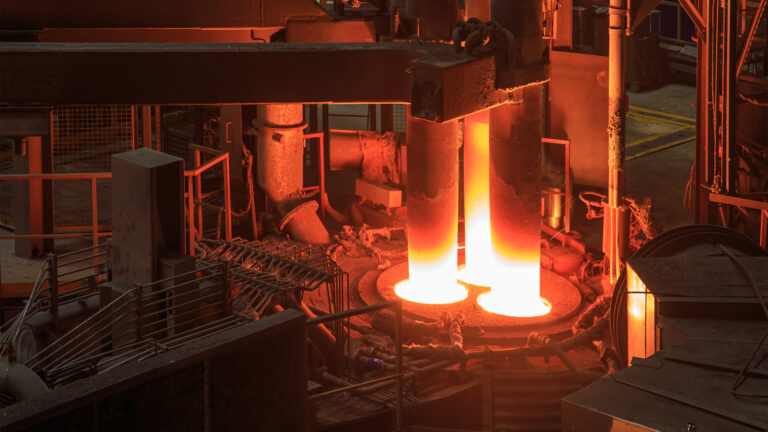
Enhance Electric Arc Furnace efficiency with real-time monitoring and advanced visual analytics. Track...
The integration of Vision AI into cement kiln operations presents a transformative opportunity for manufacturers...
Real-time, automated refractory monitoring is a game-changer for high-temperature industries, providing...
Computer vision is revolutionizing machine monitoring system as it is crucial for optimal performance...
With the boom of AI in the manufacturing sectors, predictive maintenance with AI has arrived as a game-changing...
Computer vision AI platforms are instrumental in these advancements, offering precise 24/7 monitoring,...
For more information on how Ripik.ai can help your organization reduce cloud compute costs and optimize...
Computer Vision AI is a transformative technology poised to redefine production monitoring systems, contributing...
Anomaly detection in manufacturing is a critical component of maintaining product quality, ensuring operational...
Computer Vision AI Platforms have emerged as a game-changer in the manufacturing sector, revolutionizing...
AI-Driven Productivity Tracking involves real-time monitoring of workflows, resources, machine performance,...
IR monitoring combined with vision systems are trained to identify complex patterns and subtle thermal...
Effective manufacturing process monitoring ensures operational excellence, product consistency, and proactive...
Machine health monitoring empowers maintenance teams to transition from reactive maintenance to condition-based...
As businesses scale and diversify, the demand for greater efficiency, minimal downtime, and enhanced...
AI in the mining industry is not merely a trend; it’s a necessity. With vast operations often spread...
Discover how AI is transforming plant uptime in manufacturing by enabling predictive maintenance, real-time...
Agentic AI in manufacturing operations are designed, executed, and optimized. These systems act autonomously,...
Root Mean Square Error (RMSE) is a widely used metric that measures the average magnitude of prediction...
The blast furnaces steelmaking process is a complex and requires precise control over various parameters....
AI platforms for anomaly detection are transforming a wide range of industries by leveraging advanced...
The role of AI in enhancing energy efficiency in cement plants particularly in fuel Consumption is significant...
Vision AI agent operate through a structured pipeline involving perception, analysis, decision-making,...
Particle size analysis plays a critical role in heavy industries such as cement, mining, steel, and power...
Conveyor volume scanners are revolutionizing stockpile management by providing precise, real-time data...
AI agents are revolutionizing businesses by automating processes, improving decision-making, and optimizing...
Vision AI is an advanced artificial intelligence-powered system that uses computer vision to interpret...
Automating stockpile volume measurement with Vision AI and LiDAR for industries such as mining, cement,...
Agentic AI applications in manufacturing can optimize production lines, predict equipment failures, and...
As industries continue to evolve and demand higher levels of productivity, the adoption of computer vision...
Accurate raw material moisture analysis plays a pivotal role in industrial operations, directly influencing...
Eliminating downtime in cement plants is no longer a distant goal but a tangible reality with the adoption...
Optimizing cloud architectures for cost-effectiveness is the major goal of such an architecture. The...
Computer vision technology is a replica of human vision by enabling machines to "see" and analyze images...
AI is nowadays playing a pivotal role in contributing towards the reduction of the carbon footprint in...
Incorporating computer vision into factory operations will unlock several new opportunities for efficiency,...
Alternative fuels, such as Refuse-Derived Fuel (RDF), a type of solid waste, are increasingly being considered...
Discover how Vision AI, a cutting-edge technology, surpasses traditional ML models to optimize manufacturing...
Integrating AI in the cement industry is a much-needed breath of fresh air. We’re on the brink of a new...
Research by Nature claims that artificial intelligence can contribute to fulfilling 79% of the target...
The powerful combination of artificial intelligence and cutting-edge vision AI systems presents a breakthrough...
Learn how AI-driven preventive maintenance minimizes equipment downtime in heavy manufacturing. Boost...
Computer Vision AI is changing Asset Performance Management (APM) by enabling real-time monitoring and...
Coal moisture detection ensures that coal is at the right moisture level for optimal burning to enable...
Enhance Electric Arc Furnace efficiency with real-time monitoring and advanced visual analytics. Track...
The integration of Vision AI into cement kiln operations presents a transformative opportunity for manufacturers...
Real-time, automated refractory monitoring is a game-changer for high-temperature industries, providing...
Computer vision is revolutionizing machine monitoring system as it is crucial for optimal performance...
With the boom of AI in the manufacturing sectors, predictive maintenance with AI has arrived as a game-changing...
Computer vision AI platforms are instrumental in these advancements, offering precise 24/7 monitoring,...
For more information on how Ripik.ai can help your organization reduce cloud compute costs and optimize...
Computer Vision AI is a transformative technology poised to redefine production monitoring systems, contributing...
Anomaly detection in manufacturing is a critical component of maintaining product quality, ensuring operational...
Computer Vision AI Platforms have emerged as a game-changer in the manufacturing sector, revolutionizing...
A powerful suite of intelligent agents working in sync to transform manufacturing with speed, precision, and autonomy.
Industries
Products
Support
Client Stories
Resources