Ripik.ai has been associated with IMFA since Jan 2023 towards implementation of Industry 4.0 in our Choudwar plant located in Odisha. They are working on two machine learning / data science use related to power and metallurgical coke consumption optimization through real-time alerts. The team has good knowledge in the areas of data science & machine learning, and their problem solving skill set is high
I have known Pinak, Arunabh and Navneet since 2017. They were part of Advanced analytics program in TSK between 2017 and 2020 and placed a crucial role in its delivery. The team worked end to end in conceptualization and delivery of the use cases across Blast Furnace, Sinter Plant and Steel Melt Shop.

Ripik.ai has been the analytics partner of Godrej & Boyce since March 2022. They have been doing projects with the Interio and Aerospace businesses already and we are exploring use cases for other businesses as well. Pinak and his team have worked with us closely on these manufacturing use cases. They have an unparalleled understanding of the process and can bring impact very quickly
I am delighted to write this testimonial about Ripik.ai, one of ESL’s analytics partner since January 2023. The Ripik.ai team is working on three use cases in our Upstream section at the Bokaro plant – Digital Twin of Blast Furnace, Burden Mix optimization in Blast Furnace and Green Mix optimization in Sinter Plant Burden Mix optimization in Blast Furnace and Green Mix …
Meet our elite squad - some of the brightest minds from Google, MIT, and IITs, pioneering the future at Ripik.AI.
Choose Ripik.AI for innovative Computer Vision AI Solution that drive operational excellence in manufacturing industries.
Join Ripik.AI where learning is more impactful, diversity inspires, and work-life harmony thrives.
Explore the latest breakthroughs, partnerships, and global recognitions shaping Ripik.AI's impact on industrial AI
Discover Ripik AI's latest event appearances showcasing cutting-edge AI solutions for manufacturing.
Tackle raw material variability and environmental challenges with accurate, real-time visibility.
Transforming Cement Manufacturing Operations with Our Patented Vision AI SaaS Platform for Process Optimization
Empower operators to precisely control bath temperature and significantly reduce power usage and AIF3 consumption.
Solve high impact use cases and maximize quality by identifying important parameters and sweet spot of operations.
Revolutionizing boiler operations with patented Computer Vision for higher productivity and lower energy costs.
Unlock efficiency and optimize processes across industries with our advanced, and intelligent AI technologies.
Ripik’s Vision AI Agents are your automated pair of eyes — developing intelligent monitoring agents for engineered industrial performance.
Move beyond number crunching and reduce process variability with an automated pair of eyes—our Vision AI platform
Let us walk you through a tailored demo experience.
Tackle raw material variability and environmental challenges with accurate, real-time visibility.
Transforming Cement Manufacturing Operations with Our Patented Vision AI SaaS Platform for Process Optimization
Empower operators to precisely control bath temperature and significantly reduce power usage and AIF3 consumption.
Solve high impact use cases and maximize quality by identifying important parameters and sweet spot of operations.
Revolutionizing boiler operations with patented Computer Vision for higher productivity and lower energy costs.
Unlock efficiency and optimize processes across industries with our advanced, and intelligent AI technologies.
Ripik.ai has been associated with IMFA since Jan 2023 towards implementation of Industry 4.0 in our Choudwar plant located in Odisha. They are working on two machine learning / data science use related to power and metallurgical coke consumption optimization through real-time alerts. The team has good knowledge in the areas of data science & machine learning, and their problem solving skill set is high
I have known Pinak, Arunabh and Navneet since 2017. They were part of Advanced analytics program in TSK between 2017 and 2020 and placed a crucial role in its delivery. The team worked end to end in conceptualization and delivery of the use cases across Blast Furnace, Sinter Plant and Steel Melt Shop.
Ripik.ai has been the analytics partner of Godrej & Boyce since March 2022. They have been doing projects with the Interio and Aerospace businesses already and we are exploring use cases for other businesses as well. Pinak and his team have worked with us closely on these manufacturing use cases. They have an unparalleled understanding of the process and can bring impact very quickly
I am delighted to write this testimonial about Ripik.ai, one of ESL’s analytics partner since January 2023. The Ripik.ai team is working on three use cases in our Upstream section at the Bokaro plant – Digital Twin of Blast Furnace, Burden Mix optimization in Blast Furnace and Green Mix optimization in Sinter Plant Burden Mix optimization in Blast Furnace and Green Mix …
Meet our elite squad - some of the brightest minds from Google, MIT, and IITs, pioneering the future at Ripik.AI.
Choose Ripik.AI for innovative Computer Vision AI Solution that drive operational excellence in manufacturing industries.

Join Ripik.AI where learning is more impactful, diversity inspires, and work-life harmony thrives.

Explore the latest breakthroughs, partnerships, and global recognitions shaping Ripik.AI's impact on industrial AI

Discover Ripik AI's latest event appearances showcasing cutting-edge AI solutions for manufacturing.
Ripik’s Vision AI Agents are your automated pair of eyes — developing intelligent monitoring agents for engineered industrial performance.

Move beyond number crunching and reduce process variability with an automated pair of eyes—our Vision AI platform
Let us walk you through a tailored demo experience.
Optimal productivity is the ultimate goal that every industrial operation strives to achieve. It's the outcome of streamlined processes, efficient resource use, and coordinated human-machine interaction. However, achieving it is increasingly complex. Rising operational complexity, shifting market demands, workforce variability, and the growing need for sustainability make it difficult to sustain peak performance.
Traditional methods such as manual logging, periodic reporting, and siloed KPIs often fall short. They lack real-time visibility, delay responses to disruptions, and obscure opportunities for continuous improvement.
This is where real-time productivity tracking becomes critical. AI-driven systems, powered by emerging technologies such as machine learning, computer vision, and IoT, enable continuous monitoring of machines, workflows, and resources. By providing instant, actionable insights, they help uncover process inefficiencies, improve workforce efficiency, and ensure optimal use of assets. The result in transformation of productivity tracking from a reactive and fragmented task into a proactive, system-level capability that empowers manufacturers to optimize operations with greater precision and agility.
Productivity tracking software often faces criticism in industrial environments because it is mistakenly equated with employee surveillance. This misunderstanding can lead to workforce resistance and hinder the successful adoption of new technologies. In reality, AI-driven productivity tracking is a strategic tool focused on process optimization, not on monitoring individual behavior for punitive reasons. Its primary goal is to improve workflow efficiency, resource utilization, and operational safety by identifying system-level inefficiencies.
Productivity monitoring is much more than simply tracking employee activity. It’s a comprehensive approach that evaluates the overall performance of industrial operations. It involves real-time monitoring of workflows, resources, machine performance, automated systems, and processes. This includes collecting and analyzing data related to machine degradation, process inefficiencies, workforce safety, and other key operational factors. AI-powered systems can identify bottlenecks and friction points—areas where work slows down or errors occur. These insights reveal inefficiencies in automation and resource utilization, enabling managers to make data-driven decisions or even allow autonomous systems to take corrective actions. This approach helps improve operational efficiency, reduce waste, and ultimately boost productivity to optimal levels.
Artificial Intelligence (AI) plays a pivotal role in transforming industrial operations to track and improve productivity. By leveraging advanced technologies such as machine learning, computer vision, and the Internet of Things (IoT), AI continuously monitors, analyzes, and optimizes productivity in real time. AI-driven productivity tracking integrates data from multiple sources across the factory floor and enterprise systems to create a comprehensive, dynamic view of operational performance.
Unlike traditional methods that rely on manual data collection and periodic analysis—often slow, error-prone, and reactive—AI enables automated, real-time monitoring and intelligent analysis of complex industrial processes, driving faster and more effective decision-making.
Data Sources: AI gathers data from IoT sensors, vision systems, and enterprise systems like ERP and MES to provide a full picture of operations. This integration ensures no critical data point is missed.
AI Models: Machine learning algorithms analyze this data to detect patterns, identify anomalies, and predict potential issues before they affect productivity. This enables proactive maintenance and process optimization.
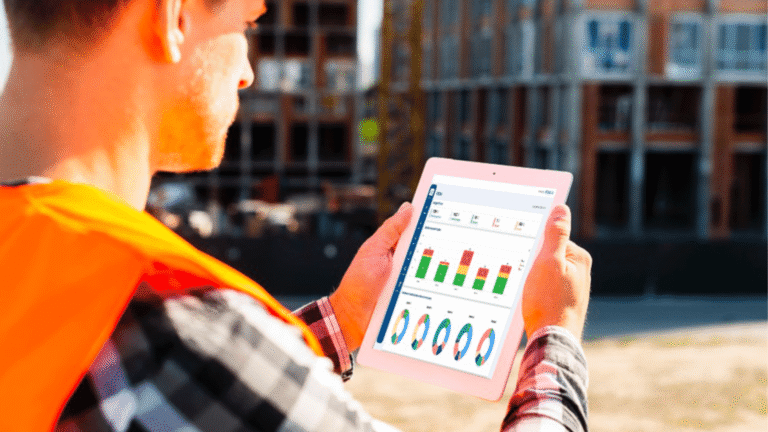
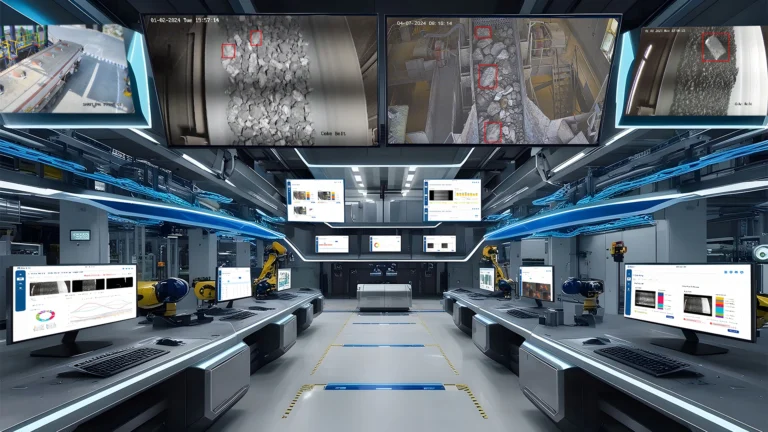
Real-Time Dashboards and Alerts: Insights are delivered through intuitive dashboards, offering instant visibility to managers. Automated alerts notify teams of urgent issues for quick resolution and minimal downtime
In complex industrial environments, productivity is not defined by a single metric or isolated activity. Instead, it results from the combined performance of interconnected systems—machines, personnel, processes, and energy resources. While productivity tracking can span a wide range of operational functions, the following are a few common and impactful areas frequently monitored across industries.
Asset monitoring is a data-driven approach that plays a crucial role in real-time productivity management by enhancing the reliability, efficiency, and lifespan of critical industrial equipment—such as conveyor belts, refractories, and other machinery. It involves continuously measuring productivity through metrics like machine uptime, downtime, cycle times, and maintenance frequency. AI-enabled systems leverage predictive maintenance, real-time condition monitoring, and advanced data analytics to detect potential failures early and optimize equipment performance. This reduces unplanned downtime and maintenance costs and improves overall equipment effectiveness (OEE).
Workforce monitoring is essential for real-time productivity management, helping organizations measure productivity and enhance workforce efficiency. Modern employee productivity monitoring tools leverage AI and workforce analytics to track task durations, workflow adherence, and safety compliance—without relying on intrusive employee monitoring. These systems support employee productivity monitoring and performance management by offering actionable insights for better shift planning, identifying skill gaps, and boosting employee engagement through transparent, data-driven feedback.
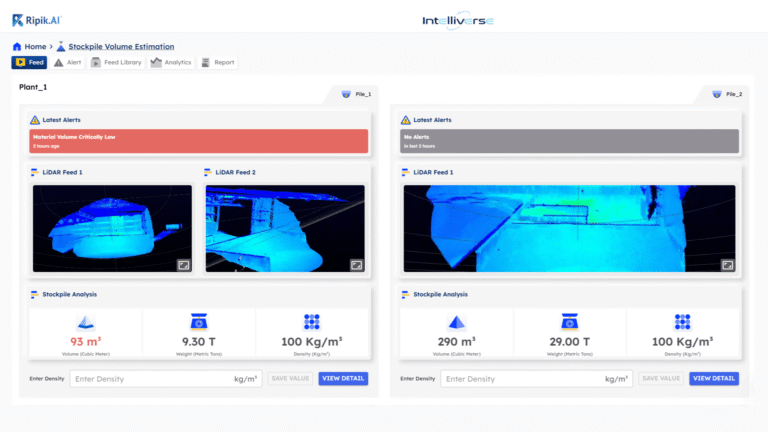
Effective inventory and material movement tracking is crucial for maintaining uninterrupted production and minimizing waste. AI-driven systems use sensors, RFID, computer vision, and LiDAR technology to monitor stock levels, track material flow, and manage stockpile tracking in real time. These technologies enable accurate demand forecasting, timely replenishment, and optimal allocation of resources ultimately improving operational efficiency and reducing downtime.
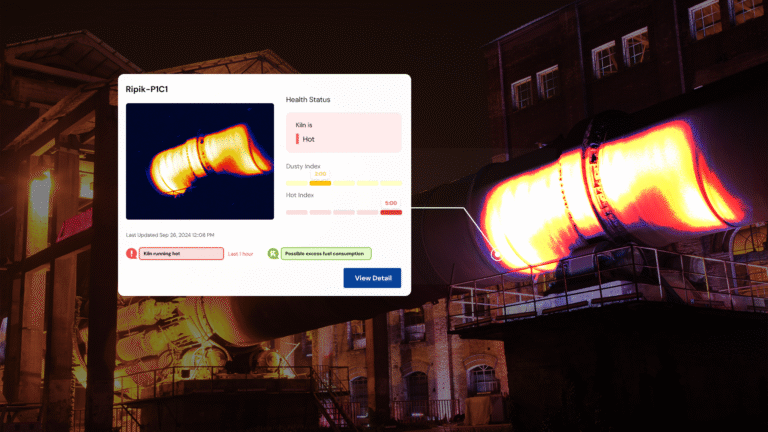
Process flow monitoring ensures smooth and efficient management of processes and tasks across production stages. For example, in the cement industry, kiln management relies on monitoring to ensure the correct raw material size is fed into the kiln and the temperature is maintained precisely. This real-time oversight optimizes the process and boosts productivity. Additionally, process flow monitoring enables rapid identification of inefficiencies and streamlines workflows, leading to improved throughput.
Energy and Resource Efficiency monitoring focuses on optimizing the use of energy, water, and raw materials throughout industrial operations. By leveraging AI-powered analytics, manufacturers gain valuable insights into consumption patterns in real time, identify wastage, and implement corrective actions to reduce costs and environmental impact. This not only enhances productivity by minimizing resource-related bottlenecks but also supports sustainability goals and regulatory compliance.
Safety and Compliance Monitoring ensures a safe work environment while helping industrial operations adhere to regulatory standards. Using AI-driven tools like computer vision and real-time analytics, manufacturers gain valuable insights into potential hazards, unsafe behaviors, and equipment malfunctions. By ensuring transparency and maintaining data security, this approach fosters workforce trust, prevents accidents, supports compliance with industry regulations, and ultimately contributes to uninterrupted productivity and a safer workplace.
A Productivity Tracking System is a platform that provides an integrated solution to monitor the productivity of individuals, machines, processes, and overall operations. It captures and analyzes a wide range of metrics tailored to the specific nature of each activity or workflow. These systems generate comprehensive reports that highlight inefficiencies, reveal performance gaps, and enable data-driven decisions to improve operational efficiency.
In industrial settings, productivity tracking systems is crucial for optimizing operations, ensuring safety, and maximizing output. These systems leverage AI, computer vision, and industrial IoT to provide real-time visibility and control. Below are few types of productivity tracking systems used across various sectors:
Machine Monitoring Systems are essential productivity tracking tools that monitor the real-time performance, health, and utilization of industrial equipment. These systems detect wear and tear early, helping extend asset lifespan and improve machine utility. By capturing key metrics such as uptime, downtime, cycle times, output rates, and maintenance needs, they enable predictive maintenance and reduce unplanned breakdowns. Leveraging AI-driven analytics and historical data trends, they optimize machine efficiency and are often integrated with SCADA, PLCs, or IoT platforms to support continuous operational improvement.
Workforce Monitoring Software is an essential tool in industrial productivity tracking, focused on improving employee productivity and streamlining workforce management. These AI-driven systems analyze employee work patterns and monitor task durations, shift adherence, and safety compliance in real-time. They also enhance worker safety through PPE detection, digital geofencing, and alert mechanisms that ensure personnel remain within safe and authorized zones. By utilizing workforce analytics, organizations can identify performance gaps, optimize labor allocation, and support data-driven decision making, leading to a more transparent, efficient, and safer work environment with improved operational performance.
Production monitoring systems are essential for productivity tracking in manufacturing and industrial environments. They track, record, and analyze production process performance across production and assembly lines, identifying areas for improvement. These systems monitor key metrics such as throughput, cycle times, defect rates, and machine utilization in real time, providing crucial insights into equipment efficiency, downtime, and quality control and ultimately boosting throughput and efficiency across sectors like automotive, FMCG, and electronics.
Process Monitoring Software is designed to continuously track and analyze workflows, tasks, and operations throughout various production stages. It helps detect bottlenecks, delays, and deviations in real time, enabling manufacturers to optimize processes, improve task sequencing, and streamline workflows. This leads to enhanced throughput, reduced cycle times, and overall operational efficiency.
Finished Goods Inspection is a quality control process that ensures products meet specified standards before shipment or sale. Using AI-powered computer vision and automated FG inspection systems, manufacturers can quickly detect defects, inconsistencies, and packaging errors. This improves product quality, reduces manual inspection errors, and enhances customer satisfaction by ensuring only compliant goods leave the production line.
As industries evolve to meet the demands of efficiency, scalability, and competitiveness, Artificial Intelligence (AI) is redefining productivity tracking. By automating data collection, enabling real-time analysis, and delivering actionable insights, AI allows organizations to track, understand, and improve productivity more effectively than ever before.
Here are the key advantages of applying AI in productivity monitoring:
Real-Time Productivity Tracking enables continuous monitoring of operations by collecting and analyzing data as it happens. This immediate visibility allows organizations to detect inefficiencies, equipment malfunctions, or workflow disruptions before they impact production while providing instant alerts on any deviations. By facilitating prompt responses, real-time monitoring minimizes downtime, prevents quality issues, and keeps productivity on track.
AI-driven productivity tracking eliminates human error and bias by automating the collection and analysis of data. Using precise algorithms, AI reliably monitors performance metrics across all operations, ensuring consistent and objective measurement over time. This enables accurate benchmarking and fair assessment. Additionally, AI models continuously learn and improve, enhancing accuracy while minimizing false positives and missed issues.
AI automates the gathering, processing, and visualization of productivity data, generating real-time detailed reports and dashboards without manual effort. These automated insights identify trends, bottlenecks, and opportunities for improvement, enabling organizations to respond proactively and continuously optimize their operations.
AI analyzes historical and real-time data collected through Productivity Tracking software to identify patterns and forecast potential issues before they occur. With a user-friendly interface, managers can easily access these predictive insights to understand future risks to productivity levels, such as equipment failures or workflow bottlenecks. This allows for proactive planning and timely interventions, helping to prevent downtime and maintain consistent, efficient operations.
With accurate, real-time data available through AI-powered productivity tracking, managers can make smarter, faster decisions on scheduling, resource allocation, and equipment maintenance. AI identifies potential inefficiencies early, enabling proactive adjustments that prevent problems before they escalate, ultimately optimizing productivity and reducing downtime.
AI-driven productivity monitoring offers transparent, real-time feedback that supports employee performance improvement rather than punishment. By providing clear metrics and actionable insights, it enhances the overall employee experience, promotes fair workload distribution, and boosts team performance. This approach fosters a culture of trust and motivation, encouraging workers to engage proactively with their tasks and collaborate more effectively.
Productivity tracking software with AI optimizes operations by minimizing downtime, improving resource allocation, and preventing costly errors. By enhancing overall efficiency and enabling proactive maintenance, AI-driven productivity monitoring helps lower operational expenses and maximize return on investment.
AI-powered real-time productivity tracking is transforming how organizations manage operations by providing continuous, accurate insights. This technology shifts businesses from reactive problem-solving to proactive decision-making, enabling smarter use of data to optimize efficiency, reduce downtime, and improve overall performance. Embracing AI in productivity monitoring is key to staying competitive and driving sustainable growth in today’s fast-paced environment.
Insights and perspectives from Ripik.ai's thought leaders
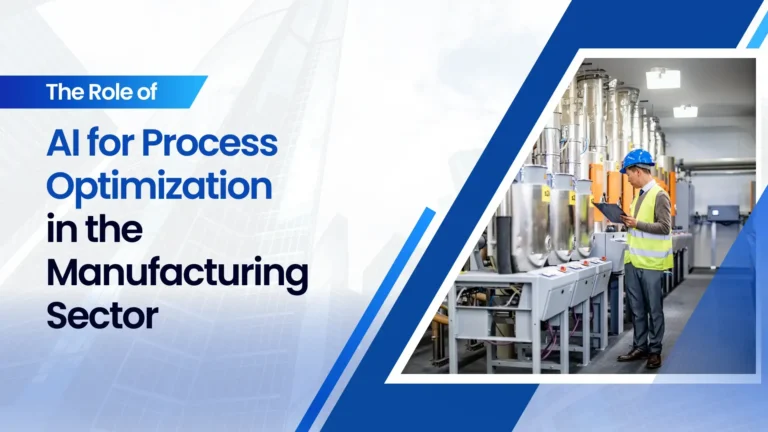
AI-Driven Productivity Tracking involves real-time monitoring of workflows, resources, machine performance,...
IR monitoring combined with vision systems are trained to identify complex patterns and subtle thermal...
Effective manufacturing process monitoring ensures operational excellence, product consistency, and proactive...
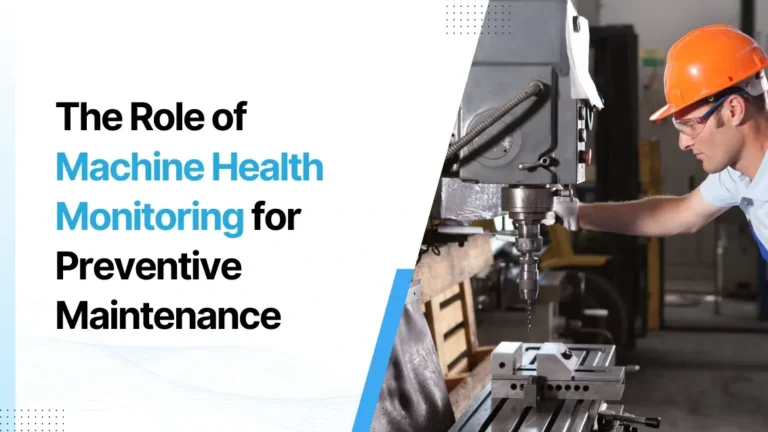
Machine health monitoring empowers maintenance teams to transition from reactive maintenance to condition-based...
As businesses scale and diversify, the demand for greater efficiency, minimal downtime, and enhanced...
AI in the mining industry is not merely a trend; it’s a necessity. With vast operations often spread...
Discover how AI is transforming plant uptime in manufacturing by enabling predictive maintenance, real-time...
Agentic AI in manufacturing operations are designed, executed, and optimized. These systems act autonomously,...
Root Mean Square Error (RMSE) is a widely used metric that measures the average magnitude of prediction...
The blast furnaces steelmaking process is a complex and requires precise control over various parameters....
AI platforms for anomaly detection are transforming a wide range of industries by leveraging advanced...
The role of AI in enhancing energy efficiency in cement plants particularly in fuel Consumption is significant...
Vision AI agent operate through a structured pipeline involving perception, analysis, decision-making,...
Particle size analysis plays a critical role in heavy industries such as cement, mining, steel, and power...
Conveyor volume scanners are revolutionizing stockpile management by providing precise, real-time data...
AI agents are revolutionizing businesses by automating processes, improving decision-making, and optimizing...
Vision AI is an advanced artificial intelligence-powered system that uses computer vision to interpret...
Automating stockpile volume measurement with Vision AI and LiDAR for industries such as mining, cement,...
Agentic AI applications in manufacturing can optimize production lines, predict equipment failures, and...
As industries continue to evolve and demand higher levels of productivity, the adoption of computer vision...
Accurate raw material moisture analysis plays a pivotal role in industrial operations, directly influencing...
Eliminating downtime in cement plants is no longer a distant goal but a tangible reality with the adoption...
Optimizing cloud architectures for cost-effectiveness is the major goal of such an architecture. The...
Computer vision technology is a replica of human vision by enabling machines to "see" and analyze images...
AI is nowadays playing a pivotal role in contributing towards the reduction of the carbon footprint in...
Incorporating computer vision into factory operations will unlock several new opportunities for efficiency,...
Alternative fuels, such as Refuse-Derived Fuel (RDF), a type of solid waste, are increasingly being considered...
Discover how Vision AI, a cutting-edge technology, surpasses traditional ML models to optimize manufacturing...
Integrating AI in the cement industry is a much-needed breath of fresh air. We’re on the brink of a new...
Research by Nature claims that artificial intelligence can contribute to fulfilling 79% of the target...
The powerful combination of artificial intelligence and cutting-edge vision AI systems presents a breakthrough...
Learn how AI-driven preventive maintenance minimizes equipment downtime in heavy manufacturing. Boost...
Computer Vision AI is changing Asset Performance Management (APM) by enabling real-time monitoring and...
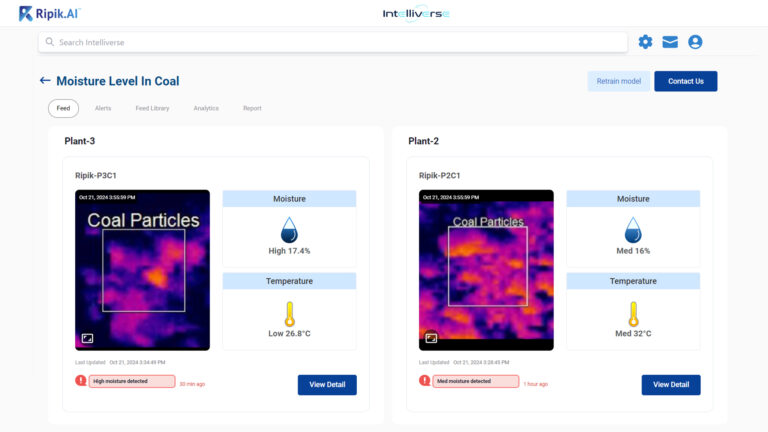
Coal moisture detection ensures that coal is at the right moisture level for optimal burning to enable...
Enhance Electric Arc Furnace efficiency with real-time monitoring and advanced visual analytics. Track...
The integration of Vision AI into cement kiln operations presents a transformative opportunity for manufacturers...
Real-time, automated refractory monitoring is a game-changer for high-temperature industries, providing...
Computer vision is revolutionizing machine monitoring system as it is crucial for optimal performance...
With the boom of AI in the manufacturing sectors, predictive maintenance with AI has arrived as a game-changing...
Computer vision AI platforms are instrumental in these advancements, offering precise 24/7 monitoring,...
For more information on how Ripik.ai can help your organization reduce cloud compute costs and optimize...
Computer Vision AI is a transformative technology poised to redefine production monitoring systems, contributing...
Anomaly detection in manufacturing is a critical component of maintaining product quality, ensuring operational...
Computer Vision AI Platforms have emerged as a game-changer in the manufacturing sector, revolutionizing...
AI-Driven Productivity Tracking involves real-time monitoring of workflows, resources, machine performance,...
IR monitoring combined with vision systems are trained to identify complex patterns and subtle thermal...
Effective manufacturing process monitoring ensures operational excellence, product consistency, and proactive...
Machine health monitoring empowers maintenance teams to transition from reactive maintenance to condition-based...
As businesses scale and diversify, the demand for greater efficiency, minimal downtime, and enhanced...
AI in the mining industry is not merely a trend; it’s a necessity. With vast operations often spread...
Discover how AI is transforming plant uptime in manufacturing by enabling predictive maintenance, real-time...
Agentic AI in manufacturing operations are designed, executed, and optimized. These systems act autonomously,...
Root Mean Square Error (RMSE) is a widely used metric that measures the average magnitude of prediction...
The blast furnaces steelmaking process is a complex and requires precise control over various parameters....
AI platforms for anomaly detection are transforming a wide range of industries by leveraging advanced...
The role of AI in enhancing energy efficiency in cement plants particularly in fuel Consumption is significant...
Vision AI agent operate through a structured pipeline involving perception, analysis, decision-making,...
Particle size analysis plays a critical role in heavy industries such as cement, mining, steel, and power...
Conveyor volume scanners are revolutionizing stockpile management by providing precise, real-time data...
AI agents are revolutionizing businesses by automating processes, improving decision-making, and optimizing...
Vision AI is an advanced artificial intelligence-powered system that uses computer vision to interpret...
Automating stockpile volume measurement with Vision AI and LiDAR for industries such as mining, cement,...
Agentic AI applications in manufacturing can optimize production lines, predict equipment failures, and...
As industries continue to evolve and demand higher levels of productivity, the adoption of computer vision...
Accurate raw material moisture analysis plays a pivotal role in industrial operations, directly influencing...
Eliminating downtime in cement plants is no longer a distant goal but a tangible reality with the adoption...
Optimizing cloud architectures for cost-effectiveness is the major goal of such an architecture. The...
Computer vision technology is a replica of human vision by enabling machines to "see" and analyze images...
AI is nowadays playing a pivotal role in contributing towards the reduction of the carbon footprint in...
Incorporating computer vision into factory operations will unlock several new opportunities for efficiency,...
Alternative fuels, such as Refuse-Derived Fuel (RDF), a type of solid waste, are increasingly being considered...
Discover how Vision AI, a cutting-edge technology, surpasses traditional ML models to optimize manufacturing...
Integrating AI in the cement industry is a much-needed breath of fresh air. We’re on the brink of a new...
Research by Nature claims that artificial intelligence can contribute to fulfilling 79% of the target...
The powerful combination of artificial intelligence and cutting-edge vision AI systems presents a breakthrough...
Learn how AI-driven preventive maintenance minimizes equipment downtime in heavy manufacturing. Boost...
Computer Vision AI is changing Asset Performance Management (APM) by enabling real-time monitoring and...
Coal moisture detection ensures that coal is at the right moisture level for optimal burning to enable...
Enhance Electric Arc Furnace efficiency with real-time monitoring and advanced visual analytics. Track...
The integration of Vision AI into cement kiln operations presents a transformative opportunity for manufacturers...
Real-time, automated refractory monitoring is a game-changer for high-temperature industries, providing...
Computer vision is revolutionizing machine monitoring system as it is crucial for optimal performance...
With the boom of AI in the manufacturing sectors, predictive maintenance with AI has arrived as a game-changing...
Computer vision AI platforms are instrumental in these advancements, offering precise 24/7 monitoring,...
For more information on how Ripik.ai can help your organization reduce cloud compute costs and optimize...
Computer Vision AI is a transformative technology poised to redefine production monitoring systems, contributing...
Anomaly detection in manufacturing is a critical component of maintaining product quality, ensuring operational...
Computer Vision AI Platforms have emerged as a game-changer in the manufacturing sector, revolutionizing...
A powerful suite of intelligent agents working in sync to transform manufacturing with speed, precision, and autonomy.
Industries
Products
Support
Client Stories
Resources