Ripik.ai has been associated with IMFA since Jan 2023 towards implementation of Industry 4.0 in our Choudwar plant located in Odisha. They are working on two machine learning / data science use related to power and metallurgical coke consumption optimization through real-time alerts. The team has good knowledge in the areas of data science & machine learning, and their problem solving skill set is high

I have known Pinak, Arunabh and Navneet since 2017. They were part of Advanced analytics program in TSK between 2017 and 2020 and placed a crucial role in its delivery. The team worked end to end in conceptualization and delivery of the use cases across Blast Furnace, Sinter Plant and Steel Melt Shop.

Ripik.ai has been the analytics partner of Godrej & Boyce since March 2022. They have been doing projects with the Interio and Aerospace businesses already and we are exploring use cases for other businesses as well. Pinak and his team have worked with us closely on these manufacturing use cases. They have an unparalleled understanding of the process and can bring impact very quickly
I am delighted to write this testimonial about Ripik.ai, one of ESL’s analytics partner since January 2023. The Ripik.ai team is working on three use cases in our Upstream section at the Bokaro plant – Digital Twin of Blast Furnace, Burden Mix optimization in Blast Furnace and Green Mix optimization in Sinter Plant Burden Mix optimization in Blast Furnace and Green Mix …
Meet our elite squad - some of the brightest minds from Google, MIT, and IITs, pioneering the future at Ripik.AI.
Choose Ripik.AI for innovative Computer Vision AI Solution that drive operational excellence in manufacturing industries.
Join Ripik.AI where learning is more impactful, diversity inspires, and work-life harmony thrives.
Explore the latest breakthroughs, partnerships, and global recognitions shaping Ripik.AI's impact on industrial AI
Discover Ripik AI's latest event appearances showcasing cutting-edge AI solutions for manufacturing.
Tackle raw material variability and environmental challenges with accurate, real-time visibility.
Transforming Cement Manufacturing Operations with Our Patented Vision AI SaaS Platform for Process Optimization
Empower operators to precisely control bath temperature and significantly reduce power usage and AIF3 consumption.
Solve high impact use cases and maximize quality by identifying important parameters and sweet spot of operations.
Revolutionizing boiler operations with patented Computer Vision for higher productivity and lower energy costs.
Unlock efficiency and optimize processes across industries with our advanced, and intelligent AI technologies.
Ripik’s Vision AI Agents are your automated pair of eyes — developing intelligent monitoring agents for engineered industrial performance.
Move beyond number crunching and reduce process variability with an automated pair of eyes—our Vision AI platform
Let us walk you through a tailored demo experience.
Tackle raw material variability and environmental challenges with accurate, real-time visibility.
Transforming Cement Manufacturing Operations with Our Patented Vision AI SaaS Platform for Process Optimization
Empower operators to precisely control bath temperature and significantly reduce power usage and AIF3 consumption.
Solve high impact use cases and maximize quality by identifying important parameters and sweet spot of operations.
Revolutionizing boiler operations with patented Computer Vision for higher productivity and lower energy costs.
Unlock efficiency and optimize processes across industries with our advanced, and intelligent AI technologies.
Ripik.ai has been associated with IMFA since Jan 2023 towards implementation of Industry 4.0 in our Choudwar plant located in Odisha. They are working on two machine learning / data science use related to power and metallurgical coke consumption optimization through real-time alerts. The team has good knowledge in the areas of data science & machine learning, and their problem solving skill set is high
I have known Pinak, Arunabh and Navneet since 2017. They were part of Advanced analytics program in TSK between 2017 and 2020 and placed a crucial role in its delivery. The team worked end to end in conceptualization and delivery of the use cases across Blast Furnace, Sinter Plant and Steel Melt Shop.
Ripik.ai has been the analytics partner of Godrej & Boyce since March 2022. They have been doing projects with the Interio and Aerospace businesses already and we are exploring use cases for other businesses as well. Pinak and his team have worked with us closely on these manufacturing use cases. They have an unparalleled understanding of the process and can bring impact very quickly
I am delighted to write this testimonial about Ripik.ai, one of ESL’s analytics partner since January 2023. The Ripik.ai team is working on three use cases in our Upstream section at the Bokaro plant – Digital Twin of Blast Furnace, Burden Mix optimization in Blast Furnace and Green Mix optimization in Sinter Plant Burden Mix optimization in Blast Furnace and Green Mix …
Meet our elite squad - some of the brightest minds from Google, MIT, and IITs, pioneering the future at Ripik.AI.
Choose Ripik.AI for innovative Computer Vision AI Solution that drive operational excellence in manufacturing industries.

Join Ripik.AI where learning is more impactful, diversity inspires, and work-life harmony thrives.

Explore the latest breakthroughs, partnerships, and global recognitions shaping Ripik.AI's impact on industrial AI

Discover Ripik AI's latest event appearances showcasing cutting-edge AI solutions for manufacturing.
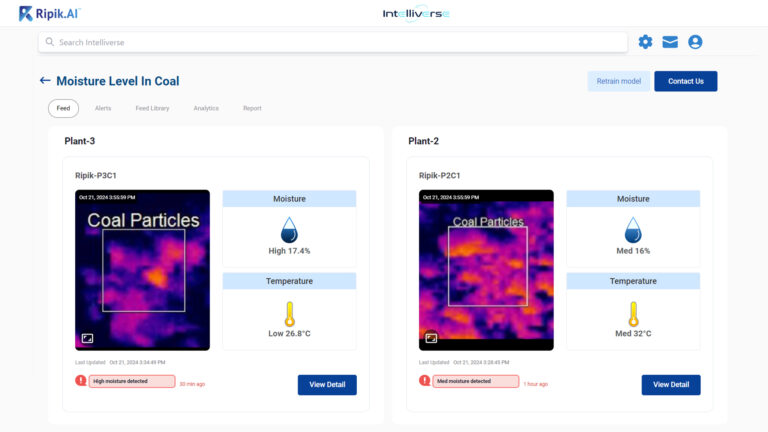
Ripik’s Vision AI Agents are your automated pair of eyes — developing intelligent monitoring agents for engineered industrial performance.
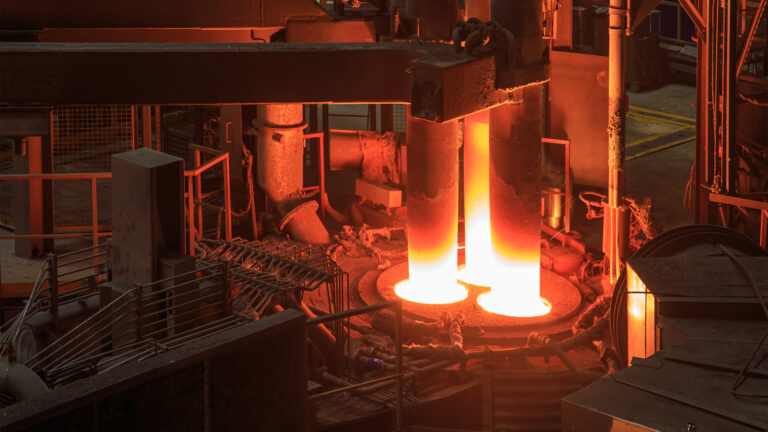
Move beyond number crunching and reduce process variability with an automated pair of eyes—our Vision AI platform

Let us walk you through a tailored demo experience.
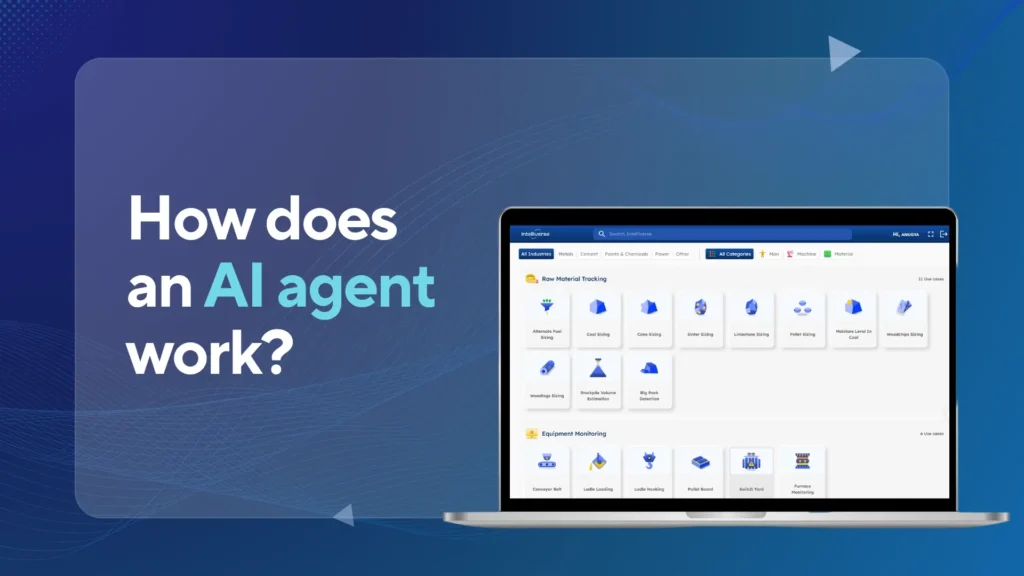
Artificial Intelligence (AI) is transforming industries, and at the heart of this revolution are AI agents—intelligent systems capability to perceive their environment, automate complex workflows, make decisions, and take actions to achieve specific goals. From virtual assistants like Siri and Alexa to self-driving cars and automated trading bots, AI agents are becoming increasingly sophisticated and essential to modern life.
But what exactly are AI agents? How do they work? And why do they matter? In this comprehensive guide, we will explore AI agents in detail—their architectures, types, core technologies, applications, and future implications.
An AI agent is an intelligent system that understands and responds to inquiries without human intervention. Using machine learning and natural language processing (NLP), these agents handle tasks from answering simple questions to solving complex problems. Unlike traditional software, AI agents continuously learn, refine responses, and adapt to changing environments, enhancing automation and efficiency.
Mathematically, AI agents function using a structured model and can be represented as a function f : P × A = R where perception (P) represents the set of environmental inputs, actions (A) define the possible responses, and the resulting states (R) indicate the system’s new condition after an action is taken. This framework allows AI agents to operate independently, optimizing their behavior for efficiency and goal achievement.
For instance, an AI diagnostic agent in healthcare can analyze medical images and patient data to detect diseases like cancer at an early stage, assisting doctors with faster and more accurate diagnoses.
Autonomy – AI agents operate independently with minimal human intervention.
Reactive & Proactive – They react to real-time stimuli and anticipate future events.
Goal-Driven – They are programmed to optimize their behavior to achieve specific objectives.
Learning Ability – AI agents improve over time using machine learning techniques.
Perceptual & Action Mechanisms – They use sensors and actuators to interact with the environment.
Artificial intelligence agents can be classified based on how they process information and make decisions:
Simple reflex agents operate based on predefined rules, its immediate data and do not have memory. They do not remember past events or learn from experience, responding only to specific conditions. This makes them ideal for simple, repetitive tasks that require quick reactions. For example, a thermostat can use a simple reflex agent to adjust temperature based on current readings.
Unlike simple reflex agents, Model-Based Reflex agents have a more advanced decision-making mechanism. Rather than merely following a specific rule, a model-based agent evaluates possible results and consequences before deciding. These agents build an internal model of the world they perceive and use that model to support their decisions.
Goal-based agents are AI agents with strong reasoning abilities, designed to achieve specific objectives. They evaluate different possible actions and choose the one that moves them closer to their goal, making them ideal for problem-solving applications. They are suitable for complex tasks, such as autonomous navigation in self-driving cars or strategic game-playing.
Utility-based agents use mathematical models and complex reasoning algorithm to optimize outcome they desire based on a reward function. Intelligent agents compares different scenarios and their respective utility values or benefits. They are often used in fields like robotics, financial trading, and automated decision-making.
Learning agent improve from their previous and experiences performance over time using machine learning. The agent adapts its learning element over time to meet specific standards based on feedback from the environment, making them more efficient in dynamic settings.
Hierarchical agents operate at multiple levels, breaking down complex tasks into smaller sub-tasks for efficient decision-making. Higher-level modules set goals, while lower-level modules execute actions. They are ideal for handling multi-step processes, such as controlling a humanoid robot, where high-level commands guide movement, and lower-level modules manage precise motions.
Multi-agent systems consist of AI agents that interact and collaborate with other agents to achieve a shared objective. Intelligent agents communicate and coordinate their actions to accomplish predefined goals efficiently. Depending on business requirements, they can be homogeneous (sharing the same capabilities and objectives) or heterogeneous (each possessing distinct skills and roles).
Explainable AI agents are designed to enhance transparency by providing clear, understandable reasoning behind their decisions. This approach is particularly valuable in regulated industries where trust and accountability are critical, such as finance, law, and healthcare. By making AI-driven processes more interpretable, XAI agents improve compliance and foster confidence in AI-powered solutions.
AI agents leverage deep learning architectures to process complex data efficiently. These models enable artificial intelligence agents to recognize patterns, make predictions, and automate decision-making in various domains. Some key deep learning architectures used by AI agents include:
Convolutional Neural Networks (CNNs): Primarily used for image recognition and computer vision tasks, such as object detection and facial recognition.
Recurrent Neural Networks (RNNs): Designed for sequential data processing, making them ideal for time-series forecasting and speech recognition.
Transformer Models (e.g., GPT, BERT, T5): Power natural language processing (NLP) applications, including text summarization, sentiment analysis, and language translation.
AI agents use reinforcement learning to make decisions by interacting with their environment and learning from feedback. Key approaches include:
Temporal Difference Learning (TD): Helps AI agents learn value functions in dynamic environments by updating predictions based on new observations.
Policy Gradient Methods: Enable AI agents to optimize decision-making by directly improving their action-selection policies.
Multi-Agent Reinforcement Learning (MARL): Used in environments where multiple AI agents interact, such as autonomous traffic management and robotic coordination.
AI agents leverage advanced NLP techniques to understand and generate human language:
Transformer Models: Models like BERT, GPT, and T5 enable tasks such as text generation, summarization, and translation.
Speech-to-Text and Text-to-Speech AI Agents: Convert spoken language into text and vice versa, improving accessibility and automation in voice assistants and customer support systems.
AI agents leverage computer vision to interpret and understand visual data for real-world applications:
Object Detection: Algorithms like YOLO and Faster R-CNN enable AI to detect and track objects in images and videos.
Semantic Segmentation: Models such as U-Net and DeepLab classify objects at a pixel level, enhancing precision in medical imaging and autonomous navigation.
AI agents use structured methods to organize and interpret information, enhancing decision-making and problem-solving:
Ontology-Based Reasoning: AI agents categorize and structure knowledge into hierarchies, improving understanding and inference.
Graph-Based Knowledge Representation: Knowledge graphs link related data points, enabling AI to establish relationships and draw meaningful insights from vast information sources.
AI agents utilize advanced decision-making techniques to optimize their actions in complex environments:
Monte Carlo Tree Search (MCTS): Used in AI planning and game-playing to evaluate potential future actions and improve performance.
Game Theoretic Approaches: Enable AI agents to make strategic decisions by analyzing competition and cooperation scenarios, optimizing outcomes in multi-agent system.
AI agents function autonomously by gathering data, analyzing it, making decisions, executing actions, and continuously learning to improve performance. These intelligent systems are used in various applications, from customer service to industrial automation.
Perception and Data Collection AI agents begin by gathering data from diverse sources such as sensors/visuals, transaction histories, customer interactions, and external databases. Intelligent agents can integrate and process real-time data enables them to understand their environment accurately and respond effectively. For example, a self-driving vehicle relies on LiDAR, cameras, and GPS data to detect its surroundings and navigate safely.
Data Processing and Decision-Making : Once data is acquired, artificial intelligence agents analyze it using advanced techniques such as machine learning, deep learning, and rule-based logic. By identifying patterns and correlations, they determine the most appropriate response or action. Many AI systems continuously refine their decision-making process by learning from past interactions. For example, virtual assistants leverage natural language processing (NLP) to interpret user queries and provide contextually relevant responses.
Action Execution: Following the decision-making process, AI agents execute the appropriate action, which may involve responding to a query, adjusting system parameters, or escalating a complex issue to a human operator. These actions are designed to be efficient and precise, optimizing overall task execution. For example, AI-powered customer support systems automatically resolve common inquiries, such as order tracking, while routing complex issues to human representatives.
Continuous Learning and Optimization: AI agents improve over time through learning mechanisms such as supervised learning, reinforcement learning, and user feedback. They refine their algorithms and update their knowledge base to enhance accuracy and effectiveness, ensuring they remain adaptive to evolving business needs and user expectations. For example, AI-driven recommendation engines personalize product suggestions based on user preferences, browsing history, and purchase behavior.
Computer vision is a branch of artificial intelligence that enables machines to perceive, interpret, and understand visual data, much like human vision. It replicates the function of human sight, imitating human eyes with a camera and the brain with a computer. Using a combination of cameras, and advanced algorithms, computer vision systems can "see" and analyze visual data, providing actionable insights that traditionally rely on human observation.
AI agents with computer vision work as vision AI agents that analyze images and videos in real time, making data-driven decisions without human intervention. This technology is widely used across industries, enhancing efficiency in manufacturing, security, healthcare, retail, and beyond by enabling real-time decision-making and operational intelligence.
Vision AI agents combine computer vision, deep learning, and AI-driven automation, along with Vision-Language Models (VLMs) to bridge the gap between visual data and natural language. These agents are capable of processing visual inputs, recognizing patterns, and making informed decisions autonomously.
The Vision AI agent operates through a structured process involving three key steps: Perception, Decision-Making, and Action. These steps enable AI agents to process visual data, derive insights, and execute tasks autonomously across various industries.
The first step in a Vision AI agent's workflow is perception, where the AI system captures and interprets visual information from the environment. Using high-resolution cameras and advanced computer vision algorithms, the AI agent extracts meaningful data from images and video streams.
Object Detection – Identifies and classifies objects within a video feed using deep learning models like CNNs (Convolutional Neural Networks).
Pattern Recognition – Detects repetitive trends or anomalies in visual data to uncover insights.
Movement Tracking – Monitors motion patterns in real-time for applications like traffic analysis, security surveillance, and industrial automation.
Once visual data is captured, the Vision AI agent processes and analyzes it to make informed decisions. This stage involves deep learning models that recognize patterns, detect anomalies, and predict outcomes based on previous observations.
Anomaly Detection – Flags unusual or unexpected behaviors, such as identifying equipment malfunctions in a factory or detecting suspicious activities in security surveillance.
Contextual Awareness – AI agents use Vision-Language Models (VLMs) to understand both images and text together, enhancing decision-making. By combining visual data with contextual textual information, VLMs allow AI agents to handle complex scenarios with more accuracy. This integration helps the system understand ambiguous situations, such as associating objects in a scene with their descriptions or recognizing context-specific instructions. Vision-Language Models (VLMs) improve decision-making by interpreting both visual cues and linguistic context, enabling more precise actions and reducing errors.
Predictive Analysis – Utilizes historical data to forecast future events, such as anticipating machine failures in predictive maintenance systems.
After processing visual inputs and making decisions, the Vision AI agent takes appropriate action based on predefined rules or AI-driven automation. This could involve triggering alerts, sending commands to machines, or adjusting system parameters to optimize performance.
Automated Quality Control – Rejects defective products in manufacturing lines without human intervention.
Smart Surveillance – Notifies security teams in real-time when unauthorized access is detected.
Autonomous Operations – Adjusts robotic systems in industrial settings to enhance efficiency and precision.
By integrating computer vision, deep learning, AI-driven automation, and Vision-Language Models (VLMs), Vision AI agents offer a comprehensive approach to real-time intelligence. These agents provide insights, improve operational efficiency, and reduce the need for manual monitoring.
AI agents offer significant advantages across industries, enhancing productivity, decision-making, and overall efficiency. Here are some key benefits:
AI agents can streamline repetitive and labor-intensive tasks, significantly reducing manual effort and improving operational efficiency. By handling structured processes with precision, they improve productivity and ensure consistency in execution. For example, robotic process automation (RPA) in banking automates transaction processing, document verification, and customer onboarding, saving time and resources.
Operating in real-time, AI agents quickly respond to changing conditions and unexpected scenarios. They continuously learn from new inputs, refine their decision-making models, and adapt to evolving environments, ensuring optimal performance.
AI agents analyze large datasets in real time, extract meaningful insights detect patterns, and support data-driven decision-making. They enhance accuracy, mitigate biases, and provide actionable intelligence for strategic planning. In healthcare, AI-powered diagnostic systems assist doctors by analyzing medical images and predicting diseases with high accuracy.
By automating processes and reducing the need for human agent, AI agents help companies cut costs. They reduce resource wastage, optimize energy consumption, and decrease the need for extensive human oversight, leading to long-term savings. For instance, AI-driven predictive maintenance in manufacturing reduces equipment downtime, saving money on repairs and increasing productivity.
AI agents can seamlessly scale operations without compromising efficiency, managing increasing workloads without compromising efficiency. They adapt to dynamic business environments, process vast amounts of data, and support expanding digital ecosystems with minimal additional infrastructure. In e-commerce, AI-driven recommendation engines analyze customer behavior and personalize product suggestions for millions of users simultaneously.
AI agents customize interactions based on user behavior, preferences, and historical data. They enhance engagement by delivering tailored recommendations, adaptive responses, and dynamic content, improving satisfaction and user retention. Streaming platforms like Netflix and Spotify use AI to perform tasks as personal assistants to recommend content based on viewing or listening history, creating a personalized experience for each user.
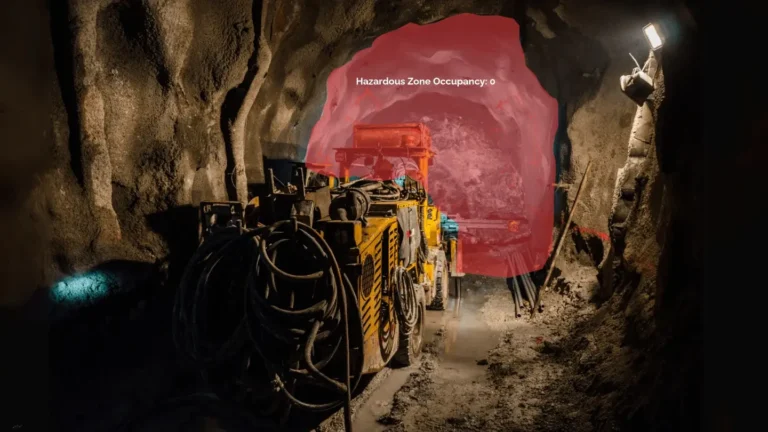
AI agents play a crucial role in hazardous environments. In industrial settings, AI-powered robots handle dangerous tasks, such as chemical handling or mining operations, reducing the risk of human injury.
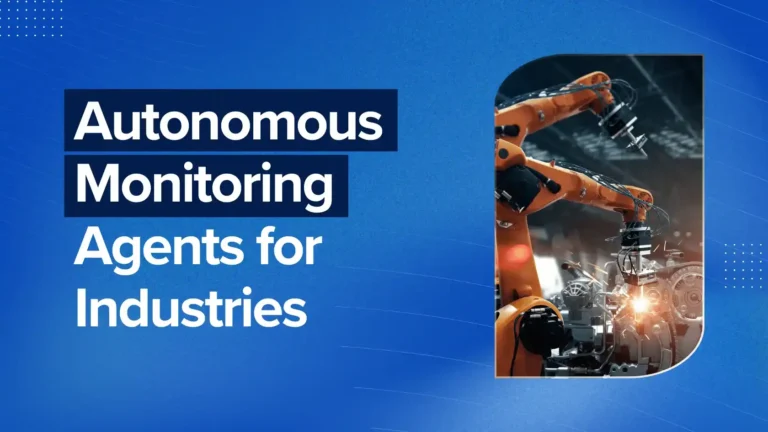
Advanced AI agents in manufacturing optimize operations by enabling predictive maintenance, production processes automation, and quality control. Smart factories leverage AI systems to monitor machinery, detect operational inefficiencies, and minimize downtime. AI-driven robotics enhance production lines, handling repetitive tasks with precision while reducing labor costs and human errors. AI-powered supply chain analytics further improve inventory management and logistics planning.
In healthcare, artificial intelligence agents support medical professionals by analyzing diagnostic images, patient records, and clinical data to detect diseases with high accuracy. AI-driven solutions enhance early detection of conditions such as cancer and cardiovascular diseases, improving treatment outcomes. Additionally, AI-powered virtual assistants and chatbots provide 24/7 patient support, assisting with symptom analysis, medication reminders, and personalized health recommendations.
AI systems cybersecurity solutions enhance data privacy and digital protection by identifying and mitigating threats in real time. AI agents analyze network traffic, detect anomalies, and prevent cyberattacks, reducing risks such as data breaches and fraud. Advanced AI models strengthen authentication systems, ensuring robust security protocols for businesses and government organizations.
Intelligent agents are revolutionizing financial markets by leveraging predictive analytics to optimize trading strategies and risk assessment. AI-driven trading bots analyze vast datasets in real time, executing transactions with speed and precision. Additionally, AI enhances fraud detection by identifying anomalies in financial transactions, preventing unauthorized activities, and strengthening cybersecurity measures across banking and investment platforms.
AI agents power self-driving cars and drones by processing sensor data, identifying obstacles, and making real-time navigation decisions. Autonomous agents with advanced algorithms predict traffic patterns, optimize routes, and enhance safety through adaptive driving technologies. AI also enables driver-assist systems, such as automatic braking and lane-keeping, reducing the risk of accidents and improving transportation efficiency.
AI agents are revolutionizing industries by automating tasks, enhancing decision-making, and optimizing processes. Their ability to learn, adapt, and operate autonomously makes them invaluable in various fields, from healthcare and finance to manufacturing and transportation.
As AI technology continues to advance, AI agents will become even more sophisticated, opening new possibilities for innovation and efficiency. Whether you are a business leader, developer, or AI enthusiast, embracing AI agents can unlock significant opportunities for growth and transformation.
Insights and perspectives from Ripik.ai's thought leaders
AI-Driven Productivity Tracking involves real-time monitoring of workflows, resources, machine performance,...
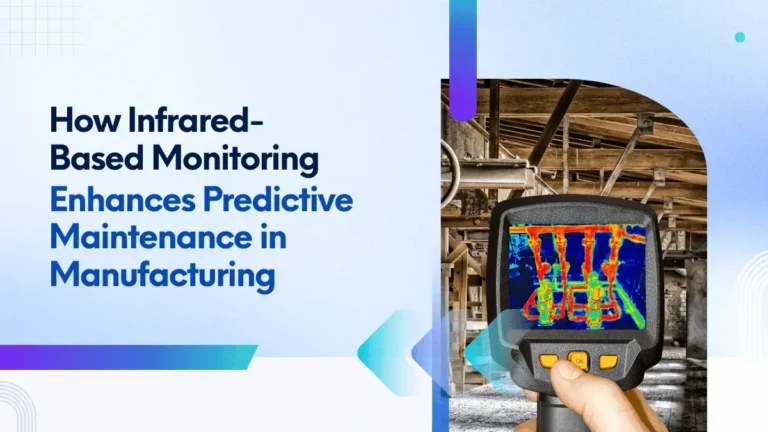
IR monitoring combined with vision systems are trained to identify complex patterns and subtle thermal...
Effective manufacturing process monitoring ensures operational excellence, product consistency, and proactive...
Machine health monitoring empowers maintenance teams to transition from reactive maintenance to condition-based...
As businesses scale and diversify, the demand for greater efficiency, minimal downtime, and enhanced...
AI in the mining industry is not merely a trend; it’s a necessity. With vast operations often spread...
Discover how AI is transforming plant uptime in manufacturing by enabling predictive maintenance, real-time...
Agentic AI in manufacturing operations are designed, executed, and optimized. These systems act autonomously,...
Root Mean Square Error (RMSE) is a widely used metric that measures the average magnitude of prediction...
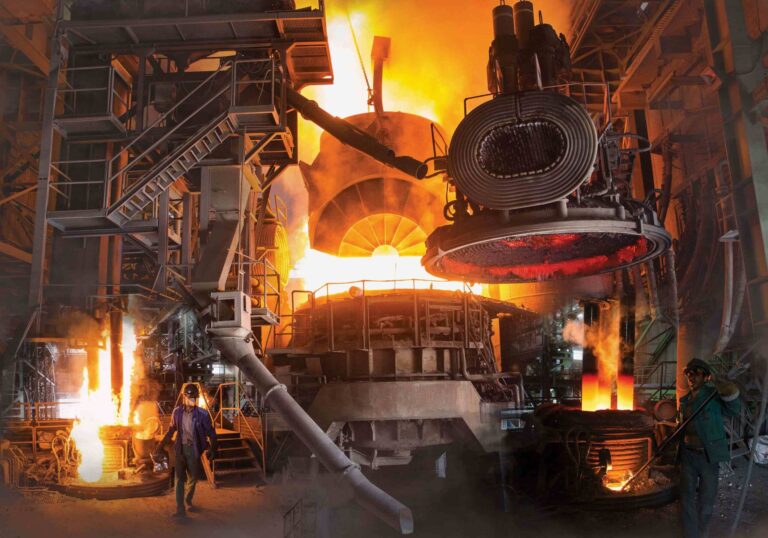
The blast furnaces steelmaking process is a complex and requires precise control over various parameters....
AI platforms for anomaly detection are transforming a wide range of industries by leveraging advanced...
The role of AI in enhancing energy efficiency in cement plants particularly in fuel Consumption is significant...
Vision AI agent operate through a structured pipeline involving perception, analysis, decision-making,...
Particle size analysis plays a critical role in heavy industries such as cement, mining, steel, and power...
Conveyor volume scanners are revolutionizing stockpile management by providing precise, real-time data...
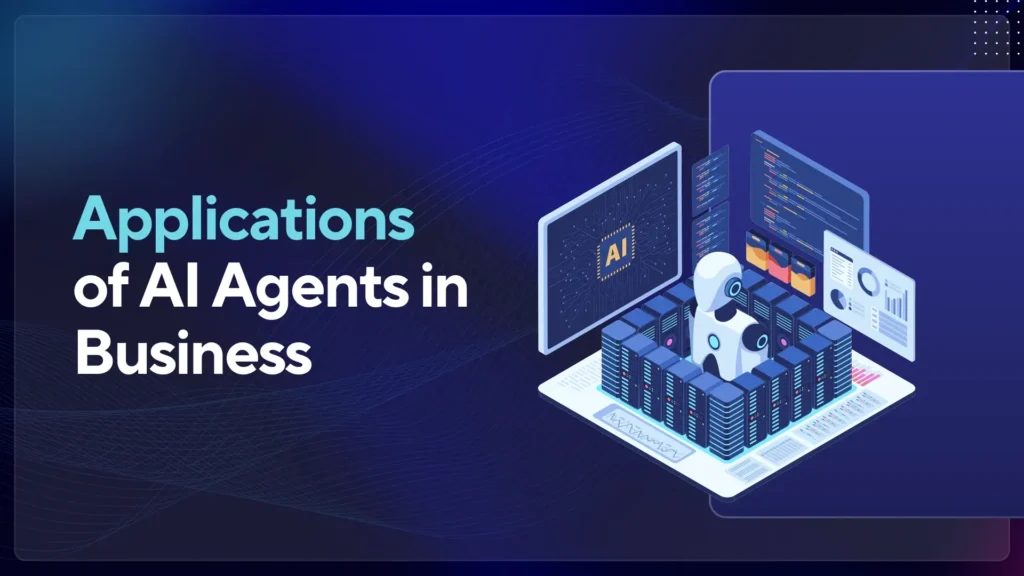
AI agents are revolutionizing businesses by automating processes, improving decision-making, and optimizing...
Vision AI is an advanced artificial intelligence-powered system that uses computer vision to interpret...
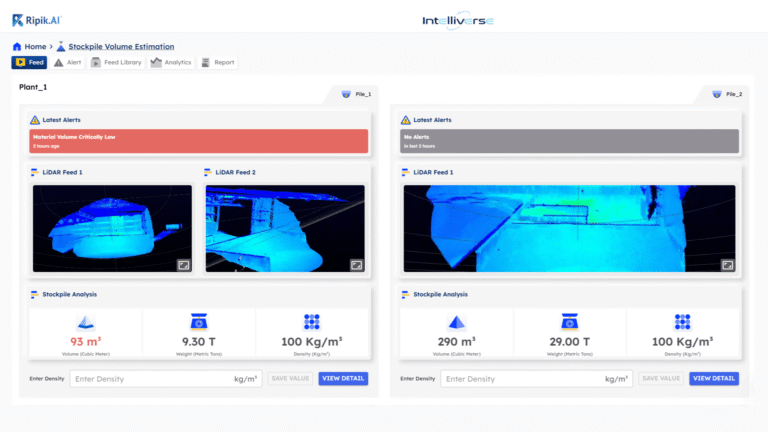
Automating stockpile volume measurement with Vision AI and LiDAR for industries such as mining, cement,...
Agentic AI applications in manufacturing can optimize production lines, predict equipment failures, and...
As industries continue to evolve and demand higher levels of productivity, the adoption of computer vision...
Accurate raw material moisture analysis plays a pivotal role in industrial operations, directly influencing...
Eliminating downtime in cement plants is no longer a distant goal but a tangible reality with the adoption...
Optimizing cloud architectures for cost-effectiveness is the major goal of such an architecture. The...
Computer vision technology is a replica of human vision by enabling machines to "see" and analyze images...
AI is nowadays playing a pivotal role in contributing towards the reduction of the carbon footprint in...
Incorporating computer vision into factory operations will unlock several new opportunities for efficiency,...
Alternative fuels, such as Refuse-Derived Fuel (RDF), a type of solid waste, are increasingly being considered...
Discover how Vision AI, a cutting-edge technology, surpasses traditional ML models to optimize manufacturing...
Integrating AI in the cement industry is a much-needed breath of fresh air. We’re on the brink of a new...
Research by Nature claims that artificial intelligence can contribute to fulfilling 79% of the target...
The powerful combination of artificial intelligence and cutting-edge vision AI systems presents a breakthrough...
Learn how AI-driven preventive maintenance minimizes equipment downtime in heavy manufacturing. Boost...
Computer Vision AI is changing Asset Performance Management (APM) by enabling real-time monitoring and...
Coal moisture detection ensures that coal is at the right moisture level for optimal burning to enable...
Enhance Electric Arc Furnace efficiency with real-time monitoring and advanced visual analytics. Track...
The integration of Vision AI into cement kiln operations presents a transformative opportunity for manufacturers...
Real-time, automated refractory monitoring is a game-changer for high-temperature industries, providing...
Computer vision is revolutionizing machine monitoring system as it is crucial for optimal performance...
With the boom of AI in the manufacturing sectors, predictive maintenance with AI has arrived as a game-changing...
Computer vision AI platforms are instrumental in these advancements, offering precise 24/7 monitoring,...
For more information on how Ripik.ai can help your organization reduce cloud compute costs and optimize...
Computer Vision AI is a transformative technology poised to redefine production monitoring systems, contributing...
Anomaly detection in manufacturing is a critical component of maintaining product quality, ensuring operational...
Computer Vision AI Platforms have emerged as a game-changer in the manufacturing sector, revolutionizing...
AI-Driven Productivity Tracking involves real-time monitoring of workflows, resources, machine performance,...
IR monitoring combined with vision systems are trained to identify complex patterns and subtle thermal...
Effective manufacturing process monitoring ensures operational excellence, product consistency, and proactive...
Machine health monitoring empowers maintenance teams to transition from reactive maintenance to condition-based...
As businesses scale and diversify, the demand for greater efficiency, minimal downtime, and enhanced...
AI in the mining industry is not merely a trend; it’s a necessity. With vast operations often spread...
Discover how AI is transforming plant uptime in manufacturing by enabling predictive maintenance, real-time...
Agentic AI in manufacturing operations are designed, executed, and optimized. These systems act autonomously,...
Root Mean Square Error (RMSE) is a widely used metric that measures the average magnitude of prediction...
The blast furnaces steelmaking process is a complex and requires precise control over various parameters....
AI platforms for anomaly detection are transforming a wide range of industries by leveraging advanced...
The role of AI in enhancing energy efficiency in cement plants particularly in fuel Consumption is significant...
Vision AI agent operate through a structured pipeline involving perception, analysis, decision-making,...
Particle size analysis plays a critical role in heavy industries such as cement, mining, steel, and power...
Conveyor volume scanners are revolutionizing stockpile management by providing precise, real-time data...
AI agents are revolutionizing businesses by automating processes, improving decision-making, and optimizing...
Vision AI is an advanced artificial intelligence-powered system that uses computer vision to interpret...
Automating stockpile volume measurement with Vision AI and LiDAR for industries such as mining, cement,...
Agentic AI applications in manufacturing can optimize production lines, predict equipment failures, and...
As industries continue to evolve and demand higher levels of productivity, the adoption of computer vision...
Accurate raw material moisture analysis plays a pivotal role in industrial operations, directly influencing...
Eliminating downtime in cement plants is no longer a distant goal but a tangible reality with the adoption...
Optimizing cloud architectures for cost-effectiveness is the major goal of such an architecture. The...
Computer vision technology is a replica of human vision by enabling machines to "see" and analyze images...
AI is nowadays playing a pivotal role in contributing towards the reduction of the carbon footprint in...
Incorporating computer vision into factory operations will unlock several new opportunities for efficiency,...
Alternative fuels, such as Refuse-Derived Fuel (RDF), a type of solid waste, are increasingly being considered...
Discover how Vision AI, a cutting-edge technology, surpasses traditional ML models to optimize manufacturing...
Integrating AI in the cement industry is a much-needed breath of fresh air. We’re on the brink of a new...
Research by Nature claims that artificial intelligence can contribute to fulfilling 79% of the target...
The powerful combination of artificial intelligence and cutting-edge vision AI systems presents a breakthrough...
Learn how AI-driven preventive maintenance minimizes equipment downtime in heavy manufacturing. Boost...
Computer Vision AI is changing Asset Performance Management (APM) by enabling real-time monitoring and...
Coal moisture detection ensures that coal is at the right moisture level for optimal burning to enable...
Enhance Electric Arc Furnace efficiency with real-time monitoring and advanced visual analytics. Track...
The integration of Vision AI into cement kiln operations presents a transformative opportunity for manufacturers...
Real-time, automated refractory monitoring is a game-changer for high-temperature industries, providing...
Computer vision is revolutionizing machine monitoring system as it is crucial for optimal performance...
With the boom of AI in the manufacturing sectors, predictive maintenance with AI has arrived as a game-changing...
Computer vision AI platforms are instrumental in these advancements, offering precise 24/7 monitoring,...
For more information on how Ripik.ai can help your organization reduce cloud compute costs and optimize...
Computer Vision AI is a transformative technology poised to redefine production monitoring systems, contributing...
Anomaly detection in manufacturing is a critical component of maintaining product quality, ensuring operational...
Computer Vision AI Platforms have emerged as a game-changer in the manufacturing sector, revolutionizing...
A powerful suite of intelligent agents working in sync to transform manufacturing with speed, precision, and autonomy.
Industries
Products
Support
Client Stories
Resources